How to Choose the Right Double Girder Gantry Crane for Your Needs?
Choosing the right Double Girder Gantry Crane can be a daunting task. Various factors influence the decision, making it crucial to understand your specific needs. With the right insights, you will be better equipped to select a crane that meets your operational demands.
Double Girder Gantry Cranes are known for their stability and load capacity. They are a popular choice in heavy lifting applications. Evaluating the work environment is essential. Consider factors like space, load weight, and lifting height. The wrong choice can lead to inefficiencies or safety hazards.
Ultimately, having a clear understanding of your requirements is vital. This will ensure that the Double Girder Gantry Crane you select will perform effectively. The right crane will enhance productivity and safety in your operations. It is about finding a balance that serves your specific needs, not merely following trends or recommendations. Each application might reveal new challenges.
Factors to Consider When Selecting a Double Girder Gantry Crane
Choosing the right double girder gantry crane requires careful consideration of several factors. The load capacity is a primary concern. Cranes can handle various weights, often ranging from 5 tons to over 100 tons. It's vital to match the crane's capacity with your heaviest load. Overloading can lead to equipment failure and increased safety risks.
Another aspect is the crane's span. This is the distance between the two girders. Depending on your working area, this span can affect maneuverability and efficiency. Industry studies show that selecting the appropriate span can increase productivity by 15% in operational settings.
Environmental conditions play a role too. If your crane operates outdoors, consider how weather might impact its functionality. Cranes exposed to harsh environments can face corrosion. Regular maintenance is key, yet many overlook this aspect. A neglected crane can result in increased downtime and repair costs, which could affect the bottom line.
Consulting with industry experts and reviewing detailed specifications will guide you in the selection process. Ultimately, a well-chosen gantry crane enhances workflow but requires a thoughtful approach to ensure reliability and safety.
Understanding Different Types of Double Girder Gantry Cranes
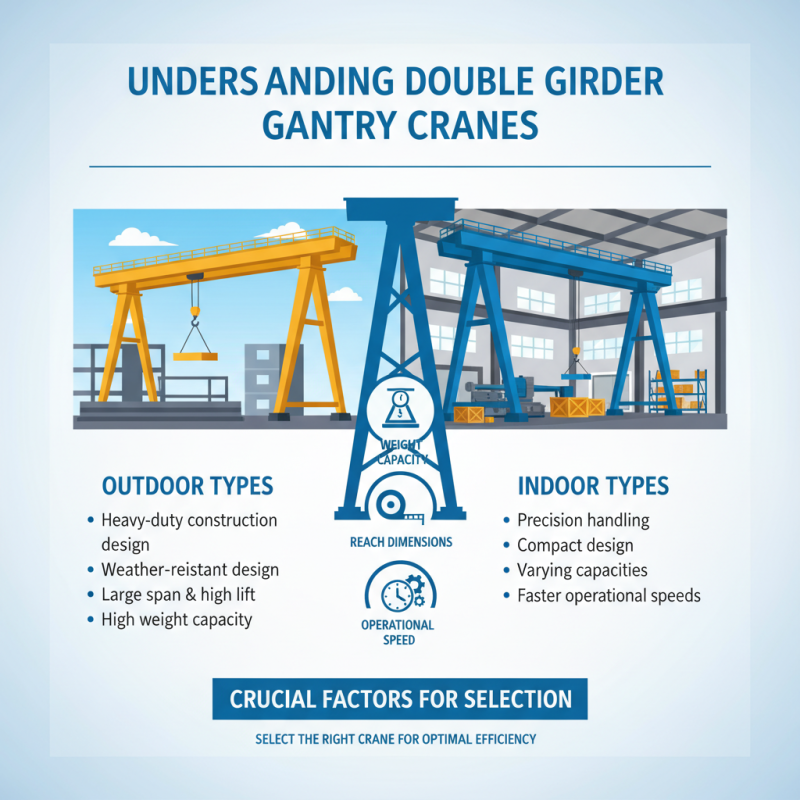
When selecting a double girder gantry crane, it is crucial to understand the various types available. These cranes often differ in design, specifications, and functionality. Some models are suited for outdoor construction work, while others excel indoors. Each type has specific weight capacities, reach dimensions, and operational speeds that can significantly affect efficiency in your operations.
Tips: Evaluate your lifting needs carefully. Consider the maximum load weight and the height required. This analysis will help prevent purchasing a crane that lacks the necessary strength.
A common type is the full gantry crane, which features a sturdy frame and is ideal for heavy loads. On the other hand, a semi-gantry crane is often used when workspace is limited. This option can be more cost-effective, yet it doesn’t have the full range of motion. Each type presents its advantages and challenges, which require thoughtful consideration.
Tips: Analyze your workspace carefully. The available installation area impacts which crane type is ideal for your operation. Space constraints can limit efficiency.
Understanding these differences can guide your investment. It’s not just about the initial cost but also long-term utility and effectiveness. Each decision you make should align with your specific operational demands. This consideration ensures that you choose a reliable solution tailored to your needs.
Assessing Load Capacity Requirements for Your Operation
Choosing the right double girder gantry crane is crucial for effective operations. Load capacity requirements are a primary consideration. According to industry studies, cranes need to handle specific weight loads safely. A typical double girder gantry crane can lift loads ranging from 5 tons to over 100 tons. This range can greatly impact project efficiency.
When assessing your load capacity needs, factor in both maximum load and frequency of use. Regularly lifting heavy loads will require a crane with a higher capacity and better durability. Overloading a crane can lead to accidents or damage. Regular inspections are essential to ensure safety and performance.
**Tips:** Consider the layout of your worksite. Space constraints can limit the type of crane you choose. Ensure the crane fits your operation's dimensions and weight distribution paths. Consulting with professionals can provide insights tailored to your unique requirements.
Evaluating Operational Environment and Space Constraints
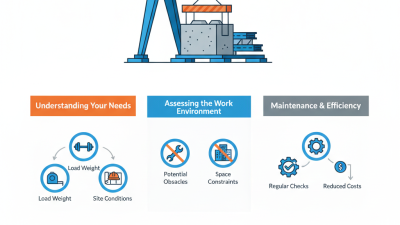
When selecting a double girder gantry crane, evaluating the operational environment and space constraints is crucial. Start by assessing your workspace. Measure the height and width to ensure the crane fits without obstructing other operations. Keep in mind any overhead pipelines, lights, or machinery that could limit space.
Consider the surface on which the crane will operate. If the ground is uneven, you may face stability issues. A flat and solid surface is essential for safe operations. If your site has limited headroom, you may need specialized designs. This reflects the need for adaptability in your choice.
**Tips:** Always prioritize safety features in your crane selection. Look for designs that offer robust stability to handle heavy loads. **Tips:** Beyond dimensions, consider the movement patterns within your workspace. Smooth operation is key for efficiency. **Tips:** Gathering feedback from frontline workers can provide insight into practical needs. Their experience can reveal gaps that might not be immediately obvious in planning.
Double Girder Gantry Crane Specifications Comparison
Identifying Safety Features and Compliance Standards
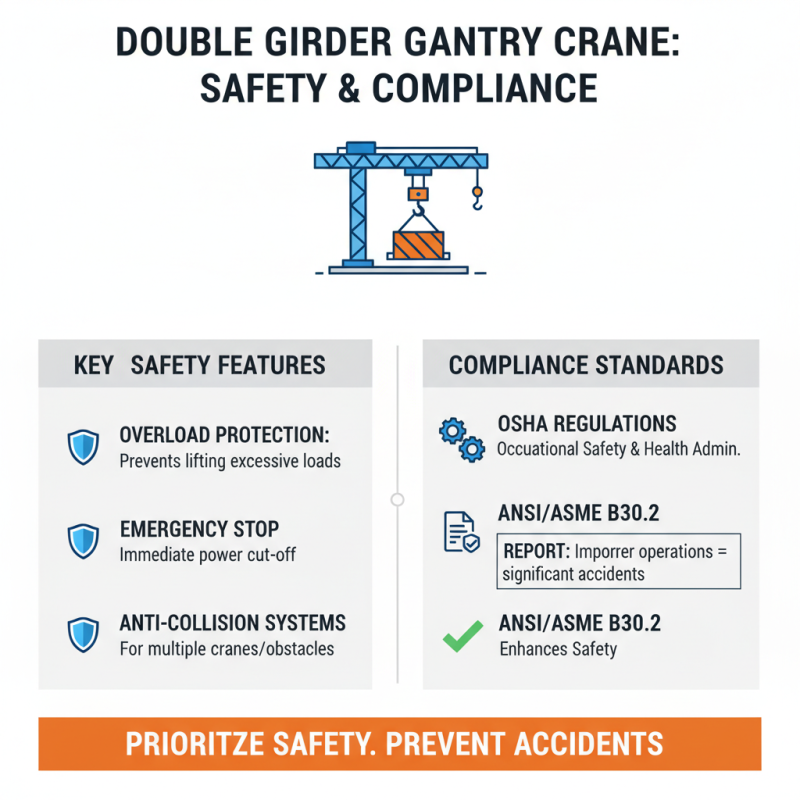
When selecting a double girder gantry crane, safety features and compliance standards should be a top priority. Cranes are often involved in heavy lifting, which poses risks if not properly managed. For instance, a report by the Occupational Safety and Health Administration (OSHA) indicates that improper crane operations account for a significant number of workplace accidents. Ensuring compliance with standards such as ANSI/ASME B30.2 enhances safety.
Key safety features to consider include overload protection systems and emergency stop controls. Overload protection prevents the crane from lifting loads beyond its capacity, reducing the risk of equipment failure. Moreover, emergency stop controls should be easily accessible to all operators. According to a recent industry study, 70% of crane accidents could have been avoided with better training and safety features.
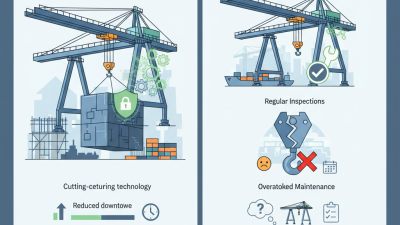
Regular inspections and adherence to safety standards are essential. A breakdown of safety data from the Crane Safety Consortium reveals that cranes with rigorous inspection routines experience 30% fewer incidents. It's crucial to understand that even the most advanced cranes can pose risks if safety protocols are not stressed. Balancing advanced technology with practical safety measures leads to a reliable lifting operation.