How to Choose the Right Electric Monorail Hoist for Your Needs?
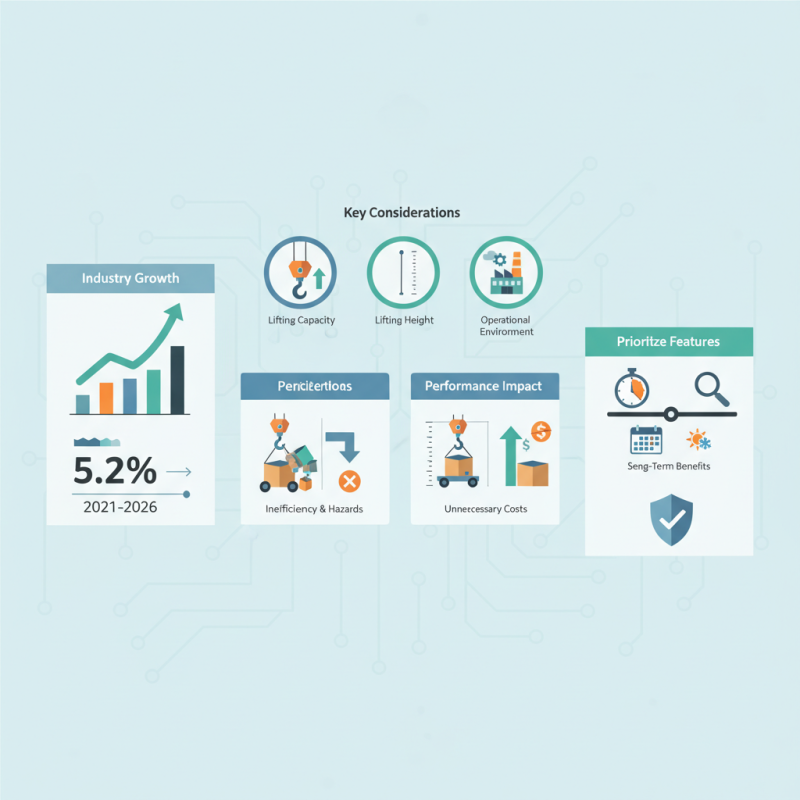
Choosing the right Electric Monorail Hoist is crucial for enhancing efficiency in various industries. In the global material handling market, hoists represent a significant segment, projected to grow at a CAGR of 5.2% from 2021 to 2026, according to industry reports. Understanding the specific needs of your operations can improve productivity and safety.
Selecting an appropriate Electric Monorail Hoist involves evaluating factors such as lifting capacity, height, and operational environment. A hoist's performance can significantly impact operational logistics. For instance, an undersized hoist could lead to inefficiencies and potential hazards. In contrast, an oversized unit may lead to unnecessary costs.
It’s essential to reflect on what features matter most. Do you prioritize speed or precision? Are your requirements seasonal? An informed decision can prevent costly mistakes later. Investing time in choosing the right Electric Monorail Hoist will result in long-term benefits for your operations.
Understanding Electric Monorail Hoists and Their Applications
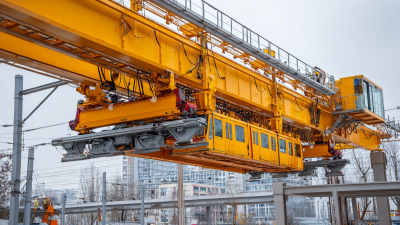
Electric monorail hoists serve diverse applications across various industries, from manufacturing to construction. These systems efficiently transport heavy loads along a single rail. Data indicates that the global market for electric hoists is expected to grow at a CAGR of 5.5% from 2021 to 2026. This growth underscores their importance in enhancing productivity and safety within workplaces.
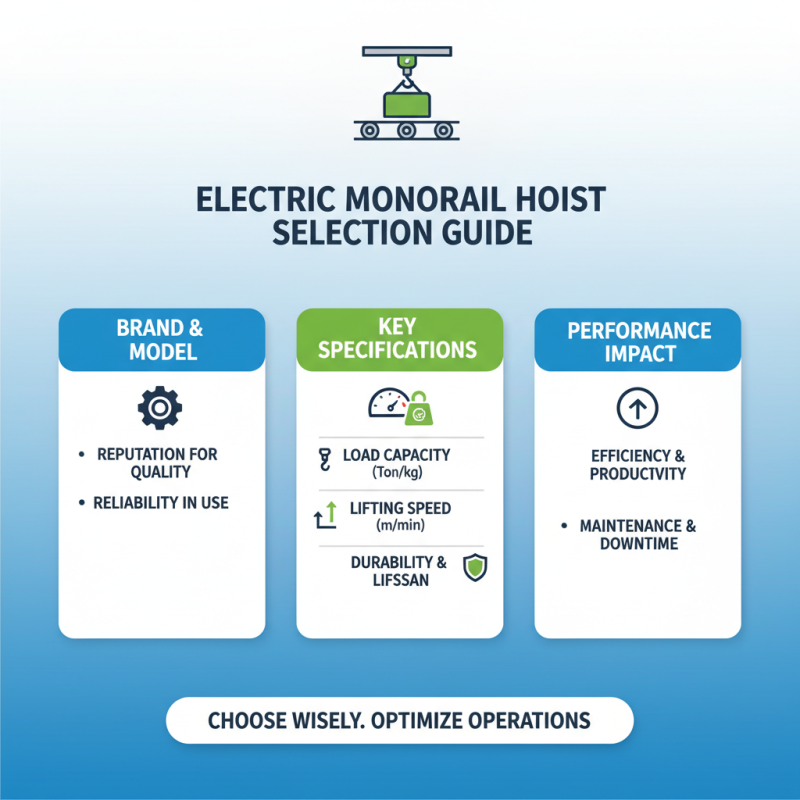
When choosing an electric monorail hoist, consider lift capacity and speed. The right capacity ensures the hoist meets your specific needs. Many models can lift loads ranging from 0.5 tons to over 50 tons. Speed also matters; hoists can operate at speeds of 2-15 m/min. A mismatch in speed or capacity could lead to inefficiencies and safety hazards.
Ease of installation and maintenance are vital factors as well. Some hoists may require specialized knowledge for setup. This can lead to increased operational downtime. Moreover, regular maintenance is crucial to prolong lifespan. Neglecting this component could result in frequent breakdowns. Addressing potential downsides helps in making informed decisions.
Key Factors to Consider When Choosing an Electric Monorail Hoist
Choosing the right electric monorail hoist requires careful consideration of several key factors. First, assess the load capacity. Each hoist has a specific weight limit. Choosing one that exceeds your requirements ensures safety and efficiency. If you're frequently lifting heavy items, prioritize higher capacity units.
Next, evaluate the lifting height. The hoist should reach the necessary height for your workspace. Consider the clearance and the space above your operation area. If your needs change, versatility is essential. A hoist with adjustable settings might be beneficial.
Finally, think about the power source. Some models run on electricity, while others may need batteries. Electric units typically offer consistent performance. Battery-operated options provide flexibility but require regular charging. Ensure the choice aligns with your operations and maintenance capacity. Consider these factors carefully to avoid costly mistakes.
Assessing Load Capacity and Weight Requirements for Your Hoist
When selecting an electric monorail hoist, it’s crucial to assess load capacity and weight requirements. Start by determining the maximum weight you plan to lift. This includes both the weight of the materials and any additional equipment used. An accurate estimate prevents overloading, which can lead to equipment failure and accidents. Always allow some margin above the expected load.
Consider the weight distribution too. If the load is uneven, you may need a hoist with a higher capacity. It’s essential to evaluate how the weight is distributed on the hoist. Understanding the center of gravity will help ensure safe lifting. Think about potential future needs; a hoist that meets current requirements might fall short later on.
Inevitably, many users overlook the safety factor. It’s all too common to choose a hoist based solely on current needs. Be mindful of the potential for growth or unexpected heavy loads. Pay close attention to the markings and specifications provided by manufacturers. They often provide insights but may not cover all scenarios. Taking the time to reflect on these aspects helps in making a well-rounded decision.
Evaluating Power Sources and Control Options for Hoists
When choosing the right electric monorail hoist, evaluating power sources and control options is essential. Different environments and tasks require specific power sources. Some hoists operate on standard electricity, while others may require three-phase power. Consider the availability of power lines and your load requirements before making a decision.
Tips: Always check the voltage compatibility before purchasing. Ensure that power ratings align with your equipment to avoid overloads.
Control options can greatly influence the efficiency of your hoist. Wired controls offer reliability. However, wireless controls provide flexibility and ease of use. If you are operating in a tight space, wired controls may become cumbersome. Take time to test different controls if possible.
Tips: Try out control systems before commitment. User experience may vary with practical usage. Evaluate your team’s comfort with technology. A familiar system can reduce errors and improve safety.
How to Choose the Right Electric Monorail Hoist for Your Needs?