Why Choose Side Loader Crane for Your Lifting Needs?
In the world of heavy lifting, the choice of equipment is crucial. Experts like John Davis, a leading engineer in crane technology, emphasize the importance of selecting the right tool for the job. He aptly states, “The Side Loader Crane is designed for efficiency and precision in tighter spaces.” This highlights the unique capabilities of Side Loader Cranes in various lifting scenarios.
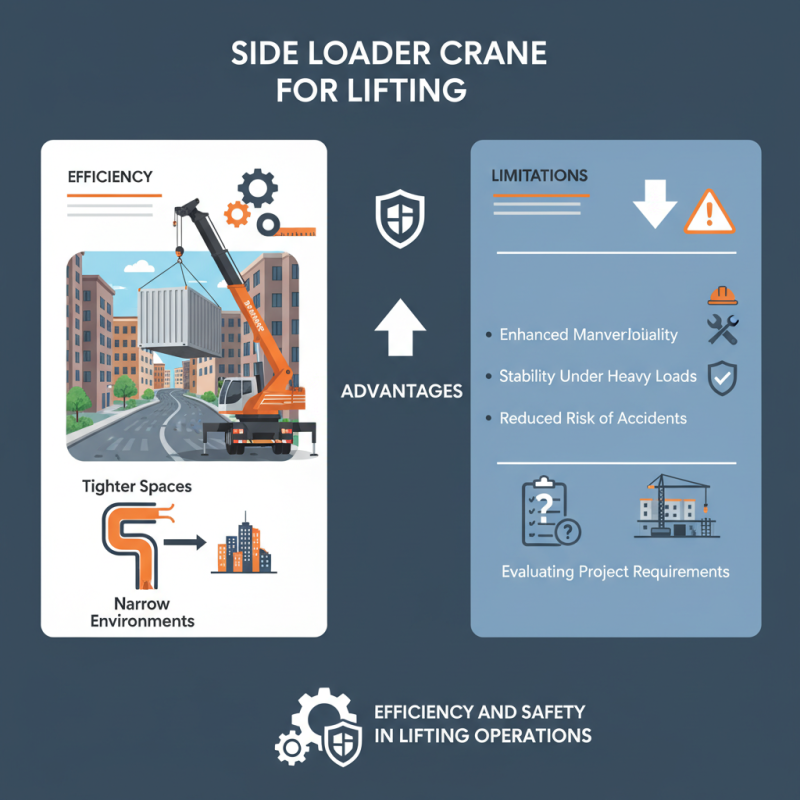
Side Loader Cranes excel in narrow environments, making them ideal for urban construction and limited-access sites. Their design allows for enhanced maneuverability while maintaining stability under heavy loads. Many operators find that using a Side Loader Crane reduces the risk of accidents compared to larger cranes. However, understanding specific operational limits is essential for safety.
While Side Loader Cranes offer impressive advantages, it is important to recognize their limitations. They may not be suitable for larger, more expansive projects. This can lead to challenges if not carefully considered. By evaluating project requirements, operators can determine if a Side Loader Crane is the best choice, ensuring both efficiency and safety in lifting operations.
Benefits of Side Loader Cranes in Lifting Operations
Side loader cranes are increasingly popular for lifting operations due to their unique design and versatile functionality. These cranes are ideal for transporting and placing heavy loads in tight spaces. Their lateral lifting capacity allows for efficient handling of materials like steel beams or large containers. This adaptability makes them perfect for construction sites, warehouses, and ports.
One significant benefit of side loader cranes is their stability during operations. They have a low center of gravity, which reduces the risk of tipping over. This design feature enhances safety, especially in challenging environments. Operators feel more confident when using equipment that prioritizes their safety and efficiency.
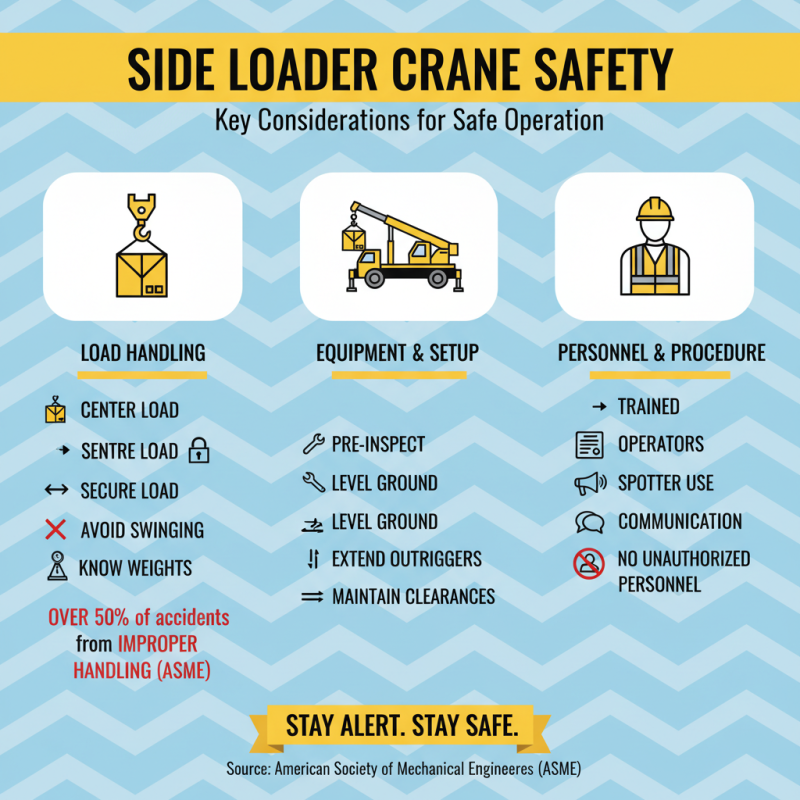
**Tip**: Regular maintenance checks can greatly enhance the performance and longevity of side loader cranes. Ensure that all vital components, such as hydraulic systems and lifting chains, are inspected routinely.
Another important aspect of side loader cranes is their ability to work in confined spaces. They can operate effectively without needing extensive clearance. Businesses often benefit from this flexibility when space is limited. However, operators must always remain cautious and aware of their surroundings.
**Tip**: Training is crucial for operators of side loader cranes. Proper training not only boosts safety but also improves overall productivity on-site.
Benefits of Side Loader Cranes in Lifting Operations
Key Features of Side Loader Cranes for Enhanced Efficiency
Side loader cranes are increasingly favored for their unique capabilities in material handling. Their design allows them to lift and transport loads in confined spaces. This feature is especially crucial in urban environments where space is limited. According to industry reports, these cranes can increase efficiency by up to 30% compared to traditional models.
One of the key attributes of side loader cranes is their stability during operation. The low center of gravity minimizes tipping risks, making them ideal for heavy loads. Reports indicate that these cranes can manage payloads ranging from 2 to 10 tons seamlessly. This flexibility allows diverse industries to implement them effectively. In addition, side loader cranes often have advanced safety features, including automatic load sensing systems, that ensure safe operation even under challenging conditions. However, operators must still be trained thoroughly to maximize these features.
Another significant aspect is their versatility. Side loaders can handle various materials, from long timber to heavy steel beams. This adaptability is essential in manufacturing and construction sectors. However, they may require regular maintenance to sustain peak performance. Failing to address this can lead to safety hazards and downtime. Balancing operational demands with preventive care is a challenge many face. Nonetheless, the overall benefits highlight the side loader crane's role in enhancing productivity and safety within diverse lifting applications.
Comparing Side Loader Cranes with Other Lifting Equipment
When choosing lifting equipment, it's crucial to understand the differences between a side loader crane and other options like conventional cranes or forklifts. Side loader cranes are uniquely designed for handling long loads in tight spaces. Their sideways operation allows for better maneuverability, especially in crowded environments or narrow aisles. This feature is particularly useful in warehouses and construction sites where space is at a premium.
In comparison, conventional cranes often require more room to operate effectively. While they excel in heavy lifting, they can be cumbersome in tight spaces. Forklifts, on the other hand, are great for short distances, but they may not handle long loads as efficiently as side loader cranes. The choice of equipment depends on the specific needs of your projects.
**Tips:** When selecting lifting equipment, assess the layout of your workspace. Consider the size and type of loads you will be lifting. Test different cranes if possible to better understand their handling and space requirements. Also, remember to prioritize safety features to ensure a secure working environment.
Why Choose Side Loader Crane for Your Lifting Needs? - Comparing Side Loader Cranes with Other Lifting Equipment
| Feature |
Side Loader Crane |
Forklift |
Mobile Crane |
| Lifting Capacity |
Up to 10 tons |
Up to 5 tons |
Variable, often 10+ tons |
| Operating Environment |
Outdoor and Indoor |
Primarily Indoor |
Outdoor |
| Maneuverability |
High |
Moderate |
Low |
| Load Handling |
Side and End Loading |
Front Loading |
Top Loading |
| Cost of Operation |
Moderate |
Low |
High |
| Maintenance |
Low |
Low |
High |
Applications and Industries that Benefit from Side Loader Cranes
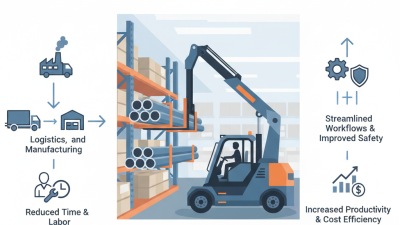
Side loader cranes are increasingly used in diverse industries due to their adaptability and efficiency. Warehousing and distribution centers benefit greatly from this equipment. They can easily lift and transport long, heavy loads like timber or metal beams. The design allows for precision handling, crucial in tight spaces where other cranes may struggle.
In manufacturing, side loader cranes are essential for moving materials. Factories use them to transport products along production lines. They help minimize downtime, keeping operations running smoothly. The compact design allows access to crowded work areas, enabling effective handling of bulky items.
Tip: Regular maintenance is essential for side loader cranes to ensure safety and longevity. Check hydraulic systems and ensure proper lubrication. This reduces wear and prevents costly repairs. Also, training operators thoroughly enhances safety and efficiency, reducing the likelihood of accidents.
Consider potential limitations as well. Side loader cranes may not be suitable for all loads. Their stability varies with weight and length. Look carefully at your specific needs before choosing this equipment.