How to Choose the Right Double Girder Gantry Crane for Your Construction Needs?
Choosing the right equipment is crucial for construction projects. A Double Girder Gantry Crane is one of the best options for heavy lifting. This crane type offers stability and high lifting capacity, making it ideal for various construction tasks.
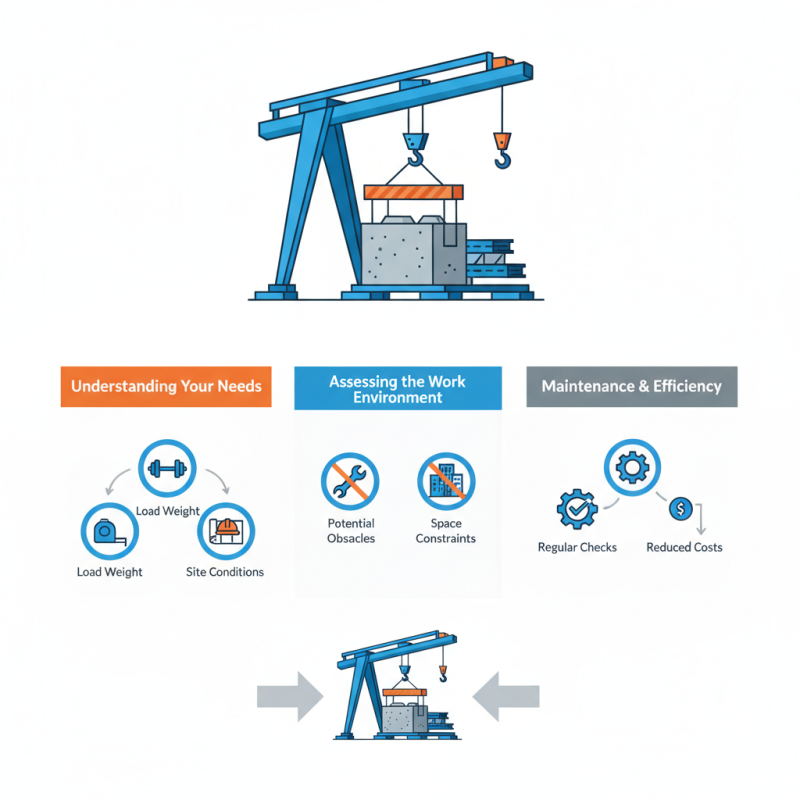
Understanding your specific needs is vital. Factors such as load weight, crane height, and site conditions should guide your choice. A Double Girder Gantry Crane can accommodate large loads, but it’s important to assess the work environment. Consider potential obstacles and space constraints that may impact crane operation.
Moreover, it is essential to evaluate the maintenance requirements of the crane. Regular checks are necessary for safety and efficiency. Choosing poorly can lead to operational issues and increased costs. Reflecting on these aspects will help ensure you select the most suitable Double Girder Gantry Crane for your construction needs.
Understanding the Basics of Double Girder Gantry Cranes
Double girder gantry cranes are essential in many construction projects. They provide a sturdy solution for lifting and moving heavy loads. Understanding their features can help you make the right choice.
When selecting a gantry crane, consider the construction site layout. A spacious area allows for more flexibility in operation. On the other hand, a cramped site may limit the crane's mobility. Think about the height and width of the crane as well. Adjusting the clearance can prevent potential accidents.
Tips: Evaluate the load capacity you need. Underestimating may result in equipment failure. Overloading can also lead to dangerous situations. Always check local regulations on crane operations. They vary by location and are vital for safety.
Another key factor is the environment. Outdoor sites may face weather challenges like wind or rain. A crane designed for outdoor use often includes weather-resistant features. Consider how these factors influence longevity and performance. Make sure to assess your long-term needs too. Changes in project scope can affect crane requirements over time.
How to Choose the Right Double Girder Gantry Crane for Your Construction Needs?
| Criteria |
Description |
Example Value |
| Load Capacity |
The maximum weight the crane can lift. |
Up to 200 tons |
| Span Length |
The distance between the crane's support legs. |
Up to 35 meters |
| Lift Height |
The maximum height the crane can raise loads. |
Up to 10 meters |
| Drive Type |
The method by which the crane is powered and controlled. |
Electric or Hydraulic |
| Control System |
The system used to operate the crane. |
Remote control or Cabin-operated |
| Environment |
The conditions in which the crane will be used. |
Indoor or Outdoor |
| Safety Features |
Safety systems included in the crane. |
Overload protection, emergency stop |
Key Factors to Consider When Choosing a Gantry Crane
When selecting the right double girder gantry crane for construction, key factors play a crucial role. Load capacity stands at the forefront. It’s essential to assess the maximum weight your project requires. Reports suggest that nearly 40% of construction errors arise from mismatched load specifications. Accuracy in this area prevents costly mistakes.
Another consideration is the crane's span. This measurement affects both the workspace and accessibility. A report by the Crane Safety Association indicates that inadequate span can limit productivity by up to 20%. In tight spaces, a more compact design might be necessary. Often, projects underestimate the space needed.
Additionally, consider the crane's operating environment. Factors such as wind speed and temperature variations are vital. A study highlighted that 25% of gantry crane failures are due to environmental oversights. Evaluating these elements early can safeguard your project’s timeline. Remember, even minor details can have significant consequences in heavy lifting operations.
Comparison of Key Factors When Choosing a Double Girder Gantry Crane
Assessing Your Construction Project's Specific Requirements
When selecting a double girder gantry crane, assessing your construction project’s specific requirements is crucial. Consider the weight capacity needed. A report from the Industrial Crane Association highlights that many projects require cranes that can handle loads of 10 tons or more. This capacity must align with your heaviest materials to ensure safety and efficiency.
Another important factor is the span of the crane. Different constructions may require varying spans for optimal performance. A study noted that spans between 20 to 50 feet are common in large construction projects, but some unique projects might require even greater spans. Besides, think about the height of lift needed. This requirement typically ranges from 10 to 20 feet, depending on the task at hand.
Finally, it’s essential to review the site conditions. Outdoor conditions can significantly alter crane performance. For example, wind resistance must be considered if the crane operates outdoors. Additionally, uneven ground may necessitate added stabilization measures. Reflect on these details; they may not seem critical, but overlooking them can lead to substantial delays and safety concerns on-site.
Evaluating Load Capacity and Span Length Needs
When selecting a double girder gantry crane, load capacity is a critical consideration. According to industry reports, cranes used in construction often range from 5 tons to over 100 tons. Choosing a crane that meets your project's specific requirements is essential. Underestimating this need can lead to operational challenges or safety risks. For instance, if the crane cannot handle the maximum weight of materials, it can halt the project or cause accidents.
Span length is equally important. The span directly affects the crane's reach and efficiency. Common spans for gantry cranes range from 10 to 40 feet, but custom options are available. A crane with an insufficient span may lead to productivity loss. Workers may struggle to move materials effectively. Reports suggest that a well-matched span can increase workflow by up to 30%. Projects often face delays when these key specifications are not aligned.
Consider site constraints as well. Limited space might restrict the crane size and type. Cranes require specific clearance heights, which could be overlooked. This oversight can lead to adjustments or additional costs. Furthermore, reflecting on future needs is vital. Anticipating growth can save expenses later. A crane adapted for future loads expands capabilities without huge investments. Prioritize both load capacity and span length in your decision-making process to optimize performance and safety.