Digital Innovations in Dust-Suppression Water Cannon Technology Best Practices?
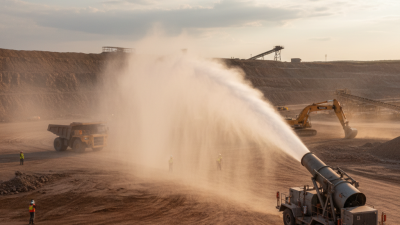
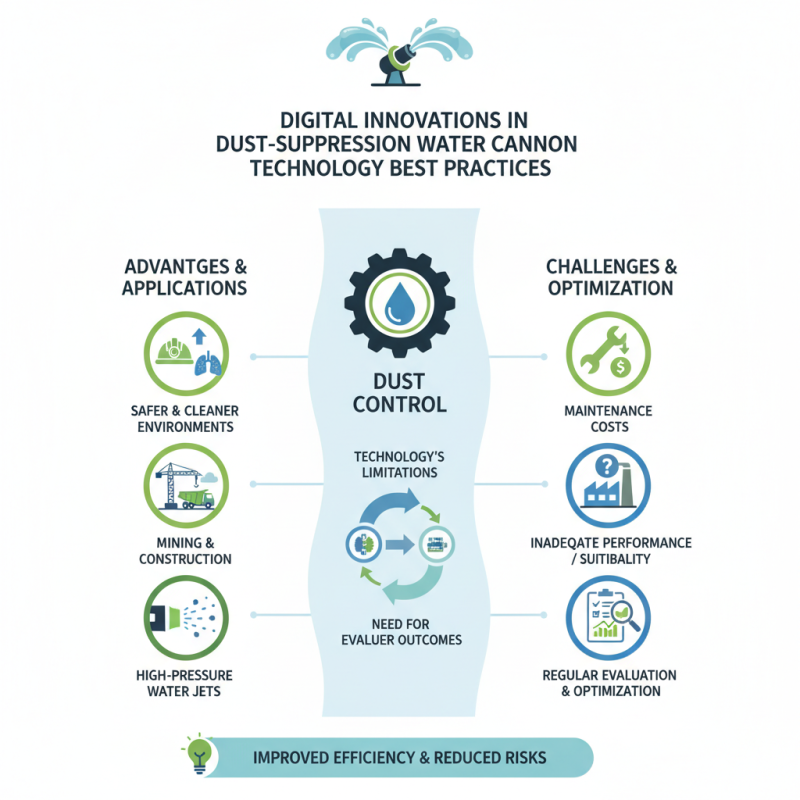
The issue of dust control has grown increasingly significant in various industries. Dust-Suppression Water Cannon technology offers an effective way to tackle this challenge. These innovations use high-pressure water jets to minimize airborne dust, ensuring safer and cleaner work environments.
Many industries, such as mining and construction, face dust-related issues. Effective dust suppression is crucial for maintaining air quality and worker health. However, not all implementations of Dust-Suppression Water Cannon systems are beneficial. Some users report inadequate performance or high maintenance costs. Exploring best practices in this area can lead to better outcomes.
It is essential to understand the technology's limitations and the need for regular evaluation. Not every setting is suitable for a Dust-Suppression Water Cannon. Discovering how to optimize its use can improve efficiency and reduce risks. This exploration into the technology highlights both its advantages and areas for improvement.
Digital Innovations Transforming Dust-Suppression Water Cannon Technology
Digital innovations are redefining dust-suppression water cannon technology. Recent reports show that air quality in industrial areas can be improved by up to 30% with advanced systems. These systems utilize digital sensors to monitor dust levels in real-time. The information collected allows for precise control of water output. This can lead to significant reductions in water usage.
Some technologies integrate mobile applications for remote operation. This enables operators to adjust settings quickly in response to changing conditions. However, not all innovations are flawless. Data reliability can sometimes be an issue. A 2022 study found that 15% of real-time data was affected by sensor calibration errors. Regular maintenance and updates are essential for optimal performance.
Additionally, the implementation of AI algorithms enhances dust prediction capabilities. These systems can analyze weather patterns and site conditions. This helps in planning effective dust suppression strategies. But these advanced solutions can be expensive and may not be accessible to all users. Cost-effectiveness needs further exploration. Overall, while digital innovations offer promise, careful consideration of their limitations is crucial.
Digital Innovations in Dust-Suppression Water Cannon Technology
This chart showcases the effectiveness of various digital innovations in enhancing the performance of dust-suppression water cannon technology. The data illustrates the reduction percentage in airborne dust particles achieved through different techniques such as automated targeting systems, remote monitoring, and advanced water dispersion methods.
Key Technologies Driving Efficiency in Water Cannon Systems
Modern dust-suppression water cannon systems rely on innovative technologies to enhance efficiency. Key advancements focus on automation, precision targeting, and real-time monitoring. Automated systems can adjust water flow based on environmental conditions. This ensures optimal dust control without waste.
Precision targeting technology uses sensors and advanced algorithms. These tools identify the most affected areas and direct water spray accordingly. Such targeted efforts reduce water usage and improve effectiveness. However, it can be challenging to calibrate these systems for varying conditions. Regular adjustments may be necessary to maintain efficacy.
Real-time monitoring systems track air quality and dust levels. This data allows for immediate operational adjustments. Yet, the reliance on technology raises concerns. Technical failures or sensor inaccuracies can lead to inefficient dust suppression. It’s crucial to explore backup systems or manual overrides. Enhancing these technologies can lead to better outcomes in various environments.
Digital Innovations in Dust-Suppression Water Cannon Technology Best Practices
| Technology |
Description |
Efficiency Gains (%) |
Implementation Year |
| Smart Sensor Technology |
Adjusts water spray based on environmental conditions. |
25 |
2021 |
| Automated Control Systems |
Remote operation and monitoring through mobile apps. |
30 |
2020 |
| Recycled Water Systems |
Utilizes treated wastewater for dust suppression. |
40 |
2019 |
| High-Pressure Systems |
Increases water droplet momentum for better coverage. |
20 |
2022 |
| Mobile Water Cannon Units |
Transportable units for various locations and needs. |
35 |
2023 |
Comparative Analysis of Conventional vs. Digital Dust-Suppression Methods
The dust-suppression industry has witnessed significant changes in recent years.
Conventional methods often rely on water sprays, which can lead to excessive water usage.
Traditional systems might struggle with achieving optimal coverage and can leave certain areas untreated.
These approaches may not always effectively control dust, causing safety and environmental concerns.
Digital innovations bring a new perspective.
Advanced sensors and automated systems enhance efficiency.
These technologies can monitor dust levels in real-time.
They adjust water output based on current conditions,
leading to less wastage. However, there are challenges. Maintenance of digital systems can be complex and costly.
Not all users are trained to adapt to these innovations, leading to potential inconsistencies in operation.
Comparing the two methods reveals an interesting dichotomy.
While digital solutions promise greater control and efficiency, they require a cultural shift in how dust suppression is perceived.
Some operators may resist change, favoring familiar techniques.
It’s crucial to weigh the benefits of new tech against the comfort of traditional methods.
Engaging in a dialogue about these practices will foster better understanding and improvement.
Case Studies: Successful Implementations of Water Cannon Technology
Water cannon technology has proven effective in various sectors for dust suppression. One notable project was in an open-pit mining site. The implementation of water cannons led to a significant reduction in airborne dust. Workers noticed fewer respiratory issues. This case highlights the importance of robust planning before deployment.
In a construction zone, simple adjustments were made to existing water cannons. Operators improved the spray patterns, increasing efficiency. However, one challenge was the inconsistent water pressure. This inconsistency led to uneven dust suppression across the site. Operators had to constantly monitor water levels. Lessons learned included the need for routine maintenance checks.
Similarly, a road construction project showcased another success. Here, large water cannon systems were used to keep dust at bay. Visibility improved significantly for drivers. However, an unexpected issue arose when winds redirected water sprays. Operators had to adapt quickly. This experience highlighted the necessity for real-time adjustments during operations. Continuous reflection on past efforts drives innovation in dust-suppression techniques.
Industry Standards and Best Practices for Effective Dust Control Systems
Effective dust control is crucial for many industries. The World Health Organization states that poor air quality can lead to serious health issues. Dust suppression systems play a vital role in improving air quality in construction, mining, and agriculture. However, implementation can be challenging.
According to a report by the Environmental Protection Agency, water cannon systems can reduce airborne dust by up to 90%. This statistic highlights their effectiveness. Yet, many operators are still unaware of the best practices. Proper nozzle selection is crucial. Nozzles must create fine droplets for optimal dust capture. However, adjustments in water pressure are often neglected, reducing the system’s efficiency.
Monitoring dust levels is equally important. Regular assessments help identify high dust moments. However, many sites fail to implement consistent monitoring strategies. Data from the International Journal of Environmental Research indicates that on-site monitoring can enhance compliance with air quality standards. Incorporating digital innovations can bridge this gap. Systems that automate monitoring provide real-time feedback. This helps in making quick adjustments, minimizing dust emissions efficiently.