Why Use a Dust Suppression Water Cannon for Effective Control?
In industries like mining, construction, and agriculture, dust is a significant concern. Reports suggest that up to 30% of respiratory problems in workers are related to dust exposure. Dust-Suppression Water Cannons offer an effective solution. According to Dr. Emily Carter, a leading expert in environmental engineering, "Using water cannons not only reduces dust but also enhances worker safety."
These systems apply a fine mist, capturing airborne particles efficiently. Research indicates that implementing Dust-Suppression Water Cannons can decrease airborne dust levels by over 80%. However, some operators overlook maintenance, leading to reduced effectiveness.
The technology is promising yet imperfect. The initial investment can be daunting, and ongoing costs may challenge smaller companies. Reflecting on their use, industries must consider both environmental compliance and employee health. Dust-Suppression Water Cannons represent an actionable step towards a cleaner workplace.
Benefits of Using Water Cannons for Dust Suppression in Industry
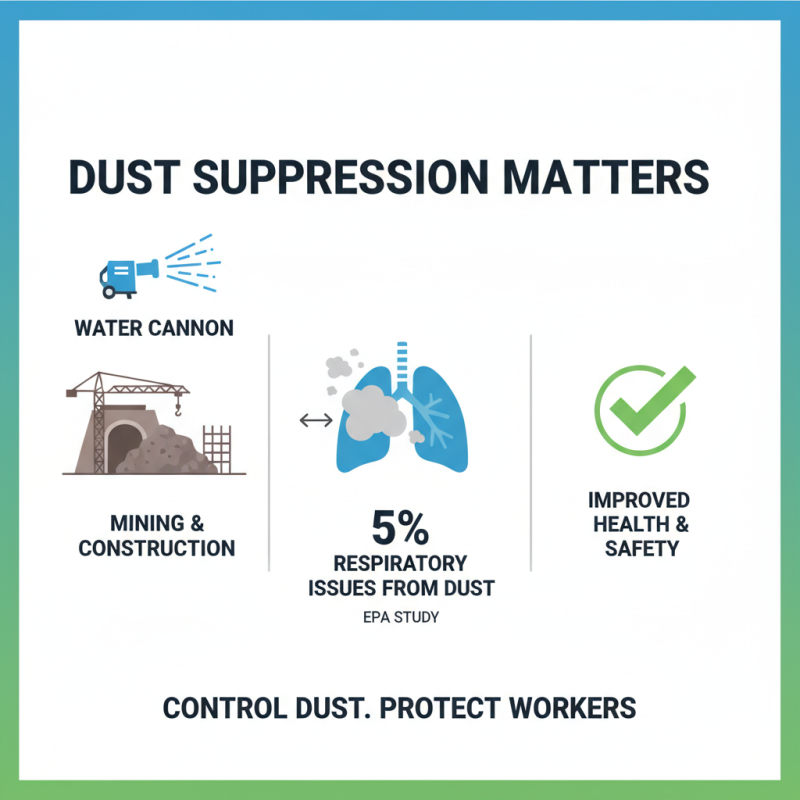
Dust suppression is crucial in various industries, particularly in mining and construction. A dust suppression water cannon is an effective tool for controlling airborne particles. According to a study by the Environmental Protection Agency, nearly 5% of respiratory health issues stem from dust exposure in such environments. This highlights the importance of managing dust effectively.
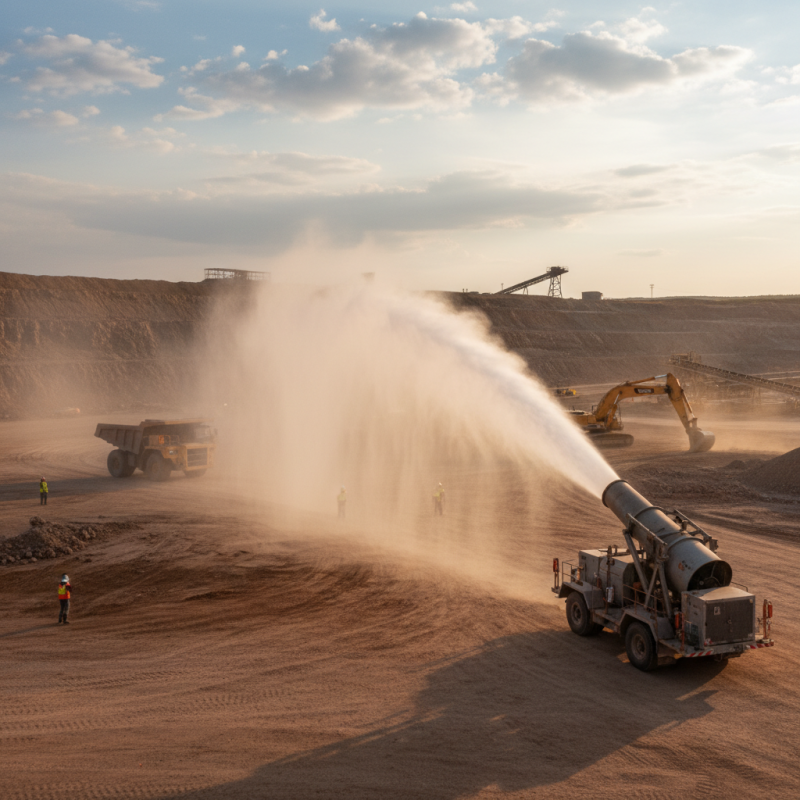
One key benefit of water cannons is their ability to cover large areas quickly. They can reduce dust by up to 90% when used correctly. The fine mist released binds dust particles, preventing them from entering the air. Additionally, water cannons are often more cost-effective than traditional dust suppression methods. Investing in this technology can lead to significant savings in health-related costs.
Tips for effective use include adjusting the water spray angles. This ensures optimal coverage and minimizes water wastage. Regular maintenance is essential too. A well-maintained cannon functions better and lasts longer.
However, achieving perfect dust control is challenging. Factors like wind speed can affect the efficiency of water cannons. Continuous monitoring is necessary to assess the impact of operations. This requires training and awareness among the workforce to adapt to varying conditions.
Operational Efficiency: The Role of Automated Water Cannons
Automated water cannons play a crucial role in enhancing operational efficiency in industries like mining and construction. They provide targeted dust suppression, ensuring that harmful particles do not disrupt air quality. According to a recent industry report, automated systems can reduce dust emissions by up to 90%. This significant decrease not only protects worker health but also meets stringent environmental regulations.
High-capacity water cannons can operate continuously, allowing for better resource management. For example, a facility equipped with an automated system can cover large areas in a short time. Reports indicate that labor costs associated with manual dust control can be reduced by 50% when automated solutions are in place. However, relying solely on technology can lead to oversight. Operators must regularly monitor the system's performance to ensure optimal functioning.
Despite the advantages, challenges remain. Maintenance of automated water cannons requires skilled personnel to keep the systems running smoothly. There are instances where failures in the automation process have led to inadequate dust control. Proper training and continuous assessment are essential to maximize the benefits of these technologies while minimizing risks. The journey toward efficient dust suppression is ongoing, with lessons learned at every step.
Operational Efficiency: The Role of Automated Water Cannons in Dust Suppression
Effectiveness of Water Cannons Compared to Traditional Dust Control Methods
Dust control is essential in various industries, especially in construction and mining. Traditional methods, like manual spraying or using misters, can be less effective. These methods often leave dust airborne, creating hazardous conditions. They rely on constant supervision and can be labor-intensive.
Water cannons provide a better solution. They use high-pressure water jets to quickly suppress dust. This technology can cover large areas efficiently. The water droplets created by the cannon are larger than those from traditional methods. They settle more rapidly, reducing airborne dust significantly. However, there are challenges. Cannon placement is crucial for maximum efficiency.
Sometimes, water consumption can be high. This raises concerns in areas with water scarcity. Managing water use is necessary. Additionally, not all dust situations are identical. It may take time to adjust settings for optimal performance. Dust control is an evolving field, and exploring better methods is vital.
Environmental Impact: Reducing Airborne Particulates with Water Cannons
Dust suppression is crucial in industries such as mining, construction, and manufacturing. Water cannons offer an effective solution to control airborne particulates. Studies reveal that water mist can reduce dust levels by up to 90% in some environments. This significant reduction improves air quality and protects worker health.
Airborne dust contributes to respiratory issues. The World Health Organization reported that particulate matter causes over 4 million premature deaths each year. Water cannons help minimize this risk. They use high-pressure jets to create a fine mist, which captures dust particles efficiently. In combination with other control measures, they can effectively lower dust emissions at job sites.
However, relying solely on water may not always be enough. Excessive water use can lead to other issues, such as water runoff and soil erosion. Balancing dust control with environmental considerations is essential. Monitoring moisture levels is critical to ensure that the use of water cannons does not create new problems. Industry guidelines suggest regular assessments to optimize water usage while still addressing airborne particulates effectively.
Why Use a Dust Suppression Water Cannon for Effective Control? - Environmental Impact: Reducing Airborne Particulates with Water Cannons
| Parameter |
Value |
Impact on Air Quality |
| Typical Dust Suppression Rate |
85% - 95% |
Significantly reduces PM10 and PM2.5 levels |
| Water Consumption per Hour |
500 - 1000 liters |
Moderate water usage; effective for large areas |
| Effective Range |
30 - 60 meters |
Covers extensive dust-prone areas |
| Environmental Considerations |
Chemical-free operation |
Safe for surrounding flora and fauna |
| Energy Consumption |
5 - 10 kWh |
Low energy consumption for high impact |
| Carbon Footprint |
Minimal |
Contributes positively to climate control efforts |
Cost-Effectiveness Analysis: Investment in Dust Suppression Water Cannons
Dust suppression is critical in industrial settings. Effective control of dust improves air quality and worker safety. However, the investment in dust suppression technology needs careful consideration. A cost-effectiveness analysis reveals that water cannons offer significant advantages. According to industry reports, using water cannons can reduce airborne dust by up to 90%. This statistic highlights their effectiveness in maintaining a cleaner work environment.
In terms of investment, the upfront costs of water cannons are significant. Yet, many companies overlook hidden costs associated with not using them. Improved air quality leads to fewer health issues and lower insurance costs. Moreover, a report by the Environmental Protection Agency indicated that dust-related incidents can cost industries millions in lost productivity and fines. Investing in water cannons can mitigate these risks over time.
Tips: Regular maintenance of dust suppression systems can enhance their lifespan. Monitoring dust levels regularly will help tailor the water cannon's operation. Engaging employees in safety practices can maximize these systems' effectiveness. Balancing investment and operational costs is vital for sustainable practices in dust control.