How to Choose the Best Towing Crane for Your Needs
Choosing the right Towing Crane is not about buying the largest model on the lot. It is about matching the machine to the loads, vehicle, and places where you actually work. A crane that looks powerful in a brochure may be awkward on a narrow roadside shoulder. A compact unit may handle routine jobs well but struggle with heavier recovery demands. The details matter.
For transparency, the following quotation is original editorial wording from a fictional composite expert, not a verified statement by a real individual: “Choose for the load you lift most often, but leave room for the difficult job you cannot predict.” We use the name Alex Rowan as a fictional towing-equipment specialist. Before treating any expert quotation as evidence, readers should verify the speaker and source.
This guide looks at lifting capacity, reach, mounting space, stability, controls, and maintenance. It also considers how real working conditions change a crane’s performance. Picture a service truck parked on uneven ground, with rain on the controls and a load held several feet from the boom. That is not the same as a tidy showroom demonstration.
Specifications provide a starting point. They do not replace careful assessment of the truck, operator training, or the manufacturer’s instructions. Some choices will still involve trade-offs. That deserves honest reflection, especially when a lower purchase price brings limits that only appear during demanding work. The right Towing Crane should fit your regular jobs and your safety plan.
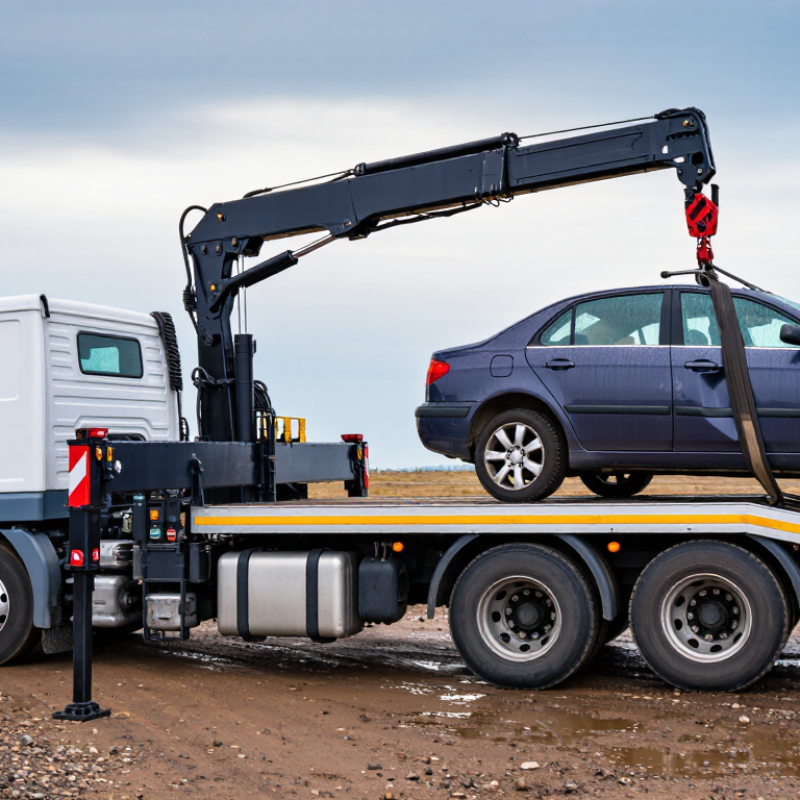
Define Recovery Loads: Size Capacity in kg at the Required Working Radius
A towing crane’s capacity is meaningful only at a stated working radius. Measure from the crane’s rotation center to the load’s vertical line, not from the bumper. A load of 800 kg may be manageable close to the vehicle but exceed capacity several metres farther out. Check the load chart for the exact boom length and radius.
Include the vehicle, recovery gear, hooks, and any suspended attachments in the total lifted weight. Then compare that figure with the crane’s rated capacity at the planned radius. For example, if the combined load is 650 kg and the chart allows 700 kg at that reach, the margin is narrow. Recheck the setup rather than assuming the headline capacity applies. Small details matter.
Ground conditions and crane position can change the practical limits. Uneven gravel, soft shoulders, or a vehicle settling under load may affect stability. Follow the crane’s operating chart and site procedures, and avoid shock loading or side pulling unless the equipment is specifically rated for it. I have seen radius estimates made by eye; they are easy to get wrong. Measure carefully, and stop if the load or setup differs from the plan.
Read the Load Chart: Compare Rated Loads Across Boom Reach in m
A towing crane’s load chart shows how capacity changes as the boom reaches farther. Compare the rated load at the working radius you actually need, measured in meters. A crane may lift a heavy engine close to the vehicle, yet have much less capacity several meters away. Check the exact boom length, boom angle, and stabilizer setup shown in the chart. The figures only apply to the listed configuration.
Estimate the distance from the crane’s rotation center to the load’s center, not just the boom tip. Include the weight of slings, hooks, and other lifting gear when checking the total load. A few extra centimeters can shift the lift into a lower capacity range. Charts can be awkward to read at first; it is easy to focus on the largest number and miss the reach beside it. Confirm chart units and consult the crane’s operating manual or a qualified operator if any detail is unclear.
Tips: Write down the required radius in meters, then compare the rated capacity at that point. Allow a practical margin instead of planning right at the chart limit. Recheck the setup before lifting. Small details matter.
Check Truck Compatibility: Match Crane Mass to GVWR and Axle Ratings
Choosing a towing crane starts with the truck’s available capacity, not the crane’s lifting capacity alone. Check the vehicle’s GVWR, which is the maximum permitted weight of the loaded truck. Then check each axle rating. The crane, mounting frame, tools, passengers, and cargo all add weight. A crane may fit the truck physically yet leave too little payload for a safe working setup.
Estimate the fully loaded vehicle weight before selecting equipment. Include the crane and its mounting hardware, then consider where that weight sits. A crane mounted behind the cab can place substantial load on the rear axle. Compare the expected front and rear axle loads with the ratings in the vehicle information and crane installation documents. When estimates feel uncertain, weigh the truck by axle with its usual gear aboard. Small details matter. A tidy spreadsheet can still miss a toolbox.
Tips: Leave a sensible capacity margin instead of aiming right at GVWR or an axle limit. Confirm the truck’s ratings and mounting requirements with qualified vehicle or crane professionals. Recheck the figures after adding accessories or changing cargo. It is easy to focus on the crane’s advertised lift and overlook the truck’s remaining payload; that is a useful mistake to question before buying.
Choose a Towing Crane That Fits Your Truck’s Weight Limits
Illustrative example: A truck with a 7,500 kg GVWR and a pre-crane operating weight of 6,300 kg has 1,200 kg of payload remaining. The bars show the payload left after adding a crane of each mass. Check the truck’s actual GVWR and front and rear axle ratings, and account for the crane’s mounting position and all other loads before choosing a crane.
Match Hydraulics: Verify Pump Flow in L/min and Pressure in bar
How to Choose the Best Towing Crane for Your Needs
Match Hydraulics: Verify Pump Flow in L/min and Pressure in bar
Match the crane’s hydraulic requirements before comparing lifting ratings. Pump flow, measured in L/min, mainly affects how quickly its cylinders move. Pressure, measured in bar, affects the force the system can deliver within its limits. Flow sets speed. Pressure is not capacity. Reach, boom angle, cylinder dimensions, and structural ratings also affect the crane’s safe working load. Check the crane specifications against the vehicle’s hydraulic supply at the engine speed you expect to use. A pump’s advertised maximum flow may not be available at idle or through a shared circuit.
Ask for flow and pressure readings under working conditions, not only peak figures. Check that the relief-valve setting, hoses, and couplings match the crane requirements. Undersized lines can contribute to heat and sluggish movement. If the pump serves other equipment, verify how much flow remains for the crane when those functions operate. This detail is easy to miss. A mismatch may slow lifting, heat the oil, or cause pressure limits to be reached, even on a powerful vehicle. Follow the equipment supplier’s guidance on operating margins, and have a qualified technician verify readings with suitable gauges. A higher bar rating alone may not solve poor performance; the system has to work as a whole.
Confirm Safe Operation: Check ASME B30.5 and OSHA 29 CFR 1926.1417
A towing crane should match the load, lift radius, and jobsite—not just the advertised capacity. For construction lifting operations covered by OSHA’s crane rule, verify requirements in 29 CFR 1926.1417. If the equipment falls within its scope, operators must follow applicable procedures and stay within rated capacity. ASME B30.5 provides guidance for mobile-crane inspection and operation. Scope matters: some towing and recovery equipment may be excluded from OSHA’s crane standard, so confirm which rules apply to your specific task.
The BLS Census of Fatal Occupational Injuries recorded 738 fatal work injuries in 2023 involving contact with objects and equipment. This broad category is not crane-specific, but it underscores why lift planning deserves attention. Before raising a vehicle or suspended load, check its weight, boom angle, working radius, rigging, and the crane’s load chart. Confirm stable ground and correctly positioned outriggers. Keep the load path clear, use agreed hand signals, and stop if wind or visibility changes. Small details count.
Tips: Match the load chart to the exact crane setup, including boom length and outrigger position. Check the chart again when the radius changes. A rushed estimate can feel convincing—and still be wrong.