What Is a Shipyard Gantry Crane and How Does It Work?
A Shipyard Gantry Crane is one of the most recognizable machines in modern shipbuilding. It moves heavy steel sections, engines, and completed modules across large construction areas. Unlike smaller workshop cranes, it operates over vast rail systems and often spans an entire dry dock or assembly zone. Its structure usually includes two tall legs, a horizontal girder, rail-mounted wheels, hoists, and operator controls.
The crane works through coordinated lifting and traveling movements. Powerful motors raise loads with wire ropes, drums, and carefully rated hooks. Trolley systems move the hoist along the main girder. Meanwhile, the crane travels along ground rails to position the load accurately. In a real shipyard, operators may shift a steel block weighing hundreds of tonnes by only a few metres. Precision matters. A small error can damage equipment, distort a hull section, or create serious safety risks.
This article examines how a Shipyard Gantry Crane is designed, controlled, and maintained. It also explains the roles of load charts, limit switches, emergency systems, rail alignment, and trained operators. Reliable operation depends on more than lifting capacity. Wind, uneven loading, visibility, communication, and inspection routines all influence performance. The machine may look simple from a distance. It is not. Even experienced teams must review procedures because conditions change quickly in shipyards. Some explanations often overlook maintenance details, and that is worth questioning. Understanding these limitations helps readers evaluate crane performance more realistically and safely.
What a Shipyard Gantry Crane Is and What It Does
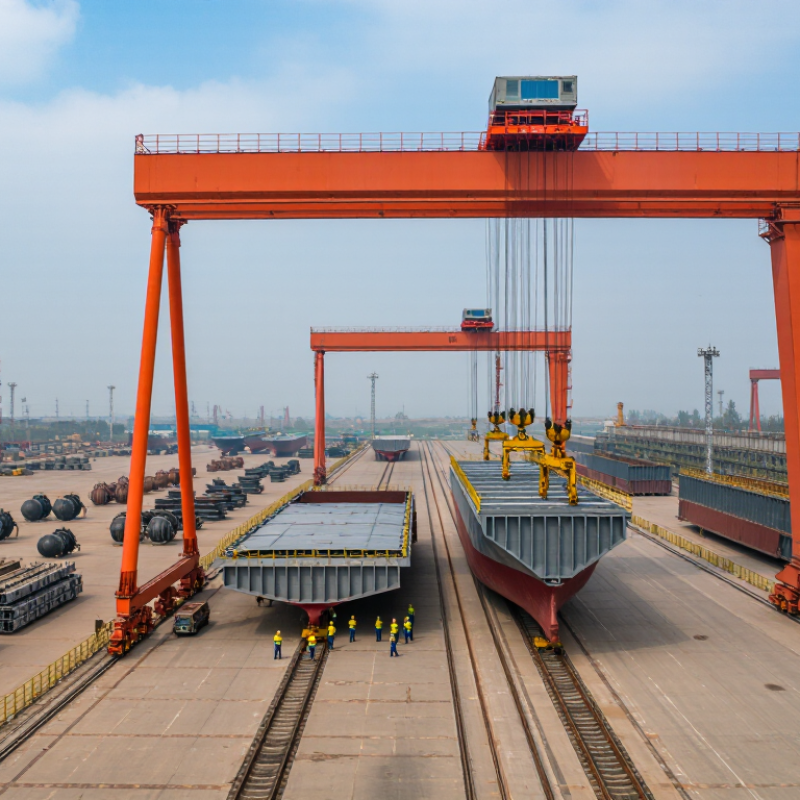
A shipyard gantry crane is a rail-mounted lifting machine built for large-scale ship construction. Its steel legs form a portal over the working area. A trolley moves across the bridge, while a hoist raises and lowers the load. The crane handles steel plates, prefabricated hull blocks, engines, and heavy equipment. Its main purpose is controlled horizontal and vertical movement. It is the yard’s overhead logistics system. Unlike mobile cranes, it works along fixed rails and covers a predictable operating zone.
UNCTAD’s Review of Maritime Transport 2024 reported that the global commercial fleet grew by 3.4% in 2023. Larger vessels can increase demand for heavier hull sections and more precise assembly. However, lifting capacity alone does not define performance. Operators must consider safe working load, span, lifting height, wind limits, ground settlement, and duty classification. ISO 4301 helps classify crane mechanisms and operating conditions. A 600-ton rating does not make every lift safe. Real yards are messier than drawings suggest. Load centers shift, rigging angles change, and communication can fail.
Tips:
Inspect hooks, wire ropes, brakes, and limit switches before each shift. Confirm the load weight and center of gravity. Keep workers outside the suspended-load zone. Use wind monitoring for exposed lifts. Small omissions become expensive, and even experienced teams can overlook them.
How a Shipyard Gantry Crane Works Step by Step
A shipyard gantry crane is a large steel structure that moves heavy ship sections across a work area. Its legs run along fixed rails, while an overhead beam supports the hoisting system. Experienced operators begin with a visual inspection. They check rails, wheels, wire ropes, brakes, hooks, and warning devices. Small defects matter. A loose cable or damaged limit switch can interrupt the entire lift.
How a Shipyard Gantry Crane Works Step by Step
The operator confirms the load weight, lifting points, and travel path. After securing the hook or lifting spreader, the crane removes slack from the rigging. The load rises slowly, often only a few centimeters, while the crew checks balance. If the load tilts, the lift stops for adjustment. Once stable, electric motors move the trolley sideways and drive the crane along its rails. The operator controls speed through a pendant or cabin system. Sensors and limit switches help prevent overtravel. Near the destination, movement becomes slower. The load is lowered onto prepared supports, and the rigging is released only after stability is confirmed. Real work is less perfect than diagrams suggest. Wind, uneven loads, or poor visibility can require repeated pauses.
Tips: Keep people outside the suspended-load zone. Use clear hand signals or radio communication. Confirm the crane’s rated capacity before every lift. Do not rely on sound alone; inspect the rigging directly. A written lift plan helps, but experienced judgment remains essential when conditions change.
How a Shipyard Gantry Crane Works Step by Step
The chart shows a representative shipyard gantry-crane operating cycle. Actual times vary with load weight, travel distance, wind conditions, operator procedures, and site layout.
A typical cycle begins with safety checks and load attachment, followed by lifting, horizontal travel, positioning, lowering, and releasing the load.
Common Gantry Crane Types Used in Shipbuilding
A shipyard gantry crane is a large steel structure that travels on rails, lifting blocks, engines, and steel sections above the construction dock. Its legs span the work area, while hoists move loads horizontally and vertically. According to UNCTAD’s Review of Maritime Transport 2024, the global commercial fleet exceeded 2.4 billion deadweight tons in early 2024. That scale keeps efficient shipyard lifting systems commercially important.
The most common type is the rail-mounted gantry crane, often called a Goliath crane. It offers high lifting capacity and precise movement across long assembly halls. Double-girder designs suit very heavy ship blocks, while single-girder cranes serve lighter fabrication tasks. Portal gantry cranes provide full dock coverage, but their fixed rails demand accurate civil engineering. Semi-gantry cranes work beside existing buildings and reduce structural changes.
Rubber-tired gantry cranes add flexibility. They can reposition between storage areas without permanent rails, although steering and ground strength require close control. Some shipyards use hybrid systems, combining rail travel with adjustable lifting equipment. The numbers vary widely. Large block-handling cranes may lift hundreds of tonnes, while smaller workshop units handle ten to fifty tonnes. Capacity alone misleads. Wind speed, load shape, center of gravity, and synchronized hoist performance can limit actual lifting work. ISO 4301-1 classification helps assess crane duty cycles, but daily inspection records remain essential. A crane may look oversized, yet poor visibility or uneven rails can create real operating problems.
Safety Systems, Maintenance, and Operating Limitations
A shipyard gantry crane moves heavy steel plates, engines, and vessel sections across a prepared work area. Its steel legs travel along ground rails, while a bridge carries the trolley and hoist. The operator raises a load with wire rope, guides it horizontally, and lowers it onto supports. Every movement depends on accurate signals and stable load control.
Safety systems are built around predictable failure points. Overload protection stops lifting beyond the rated capacity. Upper and lower limit switches prevent excessive hoist travel. Emergency stops, rail brakes, wind alarms, and anti-collision devices add further protection. Operators should confirm the load weight, lifting points, sling condition, and exclusion zone before movement. Clear radio communication matters, especially when the operator cannot see the landing area.
Maintenance requires more than a visual glance. Technicians inspect hooks, wire ropes, sheaves, brakes, bolts, electrical panels, and rail alignment. Lubrication schedules and inspection records should be current. Small rope damage can become a serious failure. It is easy to trust familiar equipment too much. A checklist is not a guarantee. Wind, poor visibility, uneven loads, power loss, and restricted travel can exceed operating limits. Lifting should stop when conditions become uncertain, not after the load starts swinging.