
Buying a Telescoping Crane for international operations requires more than comparing lifting capacity and prices. Global buyers must examine working conditions, transport limits, maintenance support, operator training, and long-term availability of parts. A crane may look powerful in a brochure, yet struggle on uneven ground or restricted urban sites.
Mike Parnell, a recognized crane-safety educator, puts the principle simply: “A lift plan is only useful when the crew can understand and follow it.” His observation matters during equipment selection. Buyers should check load charts, boom length, rated capacity, counterweight requirements, tire specifications, and control systems. They should also confirm whether the manufacturer provides clear manuals and responsive technical support.
Small details often decide performance. Picture a crane arriving at a coastal project, where salt air attacks exposed components. Consider a remote site, where a replacement hose may take weeks to arrive. These realities deserve attention before signing a purchase agreement. Price still matters. It should not dominate the decision.
This guide presents ten practical buying tips for global customers. It considers inspection records, certification expectations, shipping dimensions, fuel efficiency, safety technology, and resale value. Some recommendations may seem obvious. They are still overlooked. No checklist is perfect, either. Local soil conditions, weather patterns, and crew experience can change the right choice. Careful buyers leave room for doubt, verify technical claims, and ask difficult questions before the Telescoping Crane reaches the jobsite.
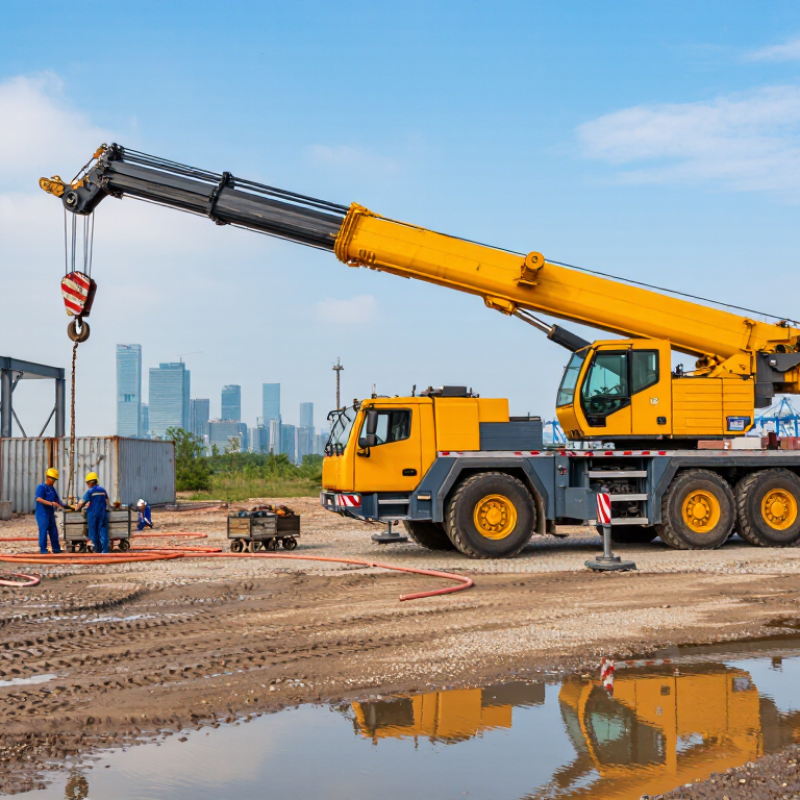
A telescoping crane should be chosen around the lift, not its advertised maximum capacity. Write the job down clearly: load weight, lifting radius, placement height, frequency, and required movement. A 20-ton machine may lift 20 tons only at a short radius. At 15 meters, its chart may allow far less. That difference matters.
Review the load chart under real conditions. Include hooks, slings, spreader beams, fuel, and other suspended equipment. The European standard EN 13000 requires rated-capacity information for mobile cranes, but the chart still depends on boom length, angle, counterweight, and outrigger position. According to OSHA’s crane safety guidance, about 75% of crane-related incidents involving overhead power lines involve contact with energized lines. Therefore, record line locations before selecting working reach. Small oversights become expensive.
Working conditions deserve equal attention. Check ground bearing pressure, slope, wind exposure, temperature, mud, and transport restrictions. A site beside a coastal warehouse behaves differently from a dry, paved yard. The 2024 Global Mobile Crane Market report by ResearchAndMarkets identifies infrastructure and construction activity as major demand drivers, yet market growth does not guarantee suitability for a specific site. I have seen buyers focus on boom reach and underestimate ground preparation. That shortcut feels efficient, but it can distort the entire purchase decision. Ask for recent inspection records, load-test evidence, maintenance history, and operator feedback. Also question your assumptions. The “perfect” crane on paper may be awkward, slow, or unsafe in daily work.

When comparing telescoping cranes, match the machine to the worksite, not just the advertised lifting capacity. Truck-mounted cranes suit road projects and frequent relocation. Rough-terrain cranes offer better control on uneven ground. Crawler telescopic cranes provide stability on soft surfaces, but transport planning becomes more demanding. A 50-ton rating means little without the load chart, boom length, and working radius.
Check maximum and minimum boom lengths, lifting height, rated capacity at each radius, counterweight requirements, and outrigger spread. Compare transport width, total weight, axle loads, ground pressure, and setup time. Hydraulic flow and engine power also affect smooth operation. Ask for test records and clear technical drawings. Numbers can mislead.
Safety equipment deserves equal attention. Look for a load moment indicator, overload protection, anti-two-block protection, emergency stop controls, boom angle display, and reliable outrigger monitoring. Operator visibility matters, especially near buildings and power infrastructure. Confirm inspection procedures, maintenance access, spare-part support, and training materials for the destination country. Weather limits should be written clearly, including wind restrictions. A checklist may miss practical problems, such as muddy ground or poor lighting. That is where careful site trials often change the buying decision.
10 Telescoping Crane Buying Tips for Global Buyers
Verify Standards, Certifications, Supplier Quality, and After-Sales Support
A telescoping crane may look reliable in a showroom, but documents reveal its real suitability. Ask which standards apply in the destination country and intended lifting environment. Request current load charts, inspection records, test reports, and certificates for major components. Check whether each document matches the crane’s serial number, rated capacity, and configuration. A certificate without traceability is only paper.
Supplier quality deserves direct attention. Review welding procedures, material records, hydraulic testing methods, and final inspection checklists. If possible, arrange a third-party inspection before shipment. Photos help, but they cannot replace measurements. Ask for videos showing boom extension, emergency controls, brakes, and load testing under safe conditions. Small inconsistencies matter. A polished document package can still hide weak factory discipline.
After-sales support should be written into the purchase agreement. Confirm spare-parts availability, response times, remote troubleshooting, technician training, and warranty exclusions. Ask how support works across time zones and whether manuals are supplied in a usable language. Do not assume every promised service is practical. One overlooked detail, such as a sensor unavailable locally, can stop a project for weeks. Experienced buyers also keep a question log, because verbal assurances are easily forgotten.
Verify standards, certifications, supplier quality, and after-sales support before placing an international order.
The scores use a practical procurement scale from 1 to 5, where 5 indicates a critical verification item. Buyers should match each check with the regulations, lifting conditions, and service requirements of the destination country.
When buying a telescoping crane internationally, the purchase price is only the visible number. Build a total ownership worksheet before requesting final quotations. Include the crane, attachments, operator training, inspection fees, insurance, spare parts, storage, and planned maintenance. Ask for service intervals in operating hours, not vague calendar promises. A unit used near saltwater may need more frequent corrosion checks. That detail changes the budget. Record fuel or electricity use during a representative lifting cycle. Real site data beats a brochure estimate.
Shipping costs depend on folded dimensions, gross weight, center of gravity, and port equipment. Request a packing list with exact crate sizes and lifting points. Compare flat-rack, container, and breakbulk options with a qualified freight professional. The cheapest ocean rate can become expensive after port storage or special handling. Check inland haulage from the destination port to your yard. Measure gates, bridge limits, turning space, and unloading surfaces before dispatch. One overlooked bridge restriction can delay delivery for weeks. It happens.
Import duties require more than a guessed percentage. Confirm the tariff classification, customs value, origin documents, and applicable taxes with a licensed customs adviser. Ask whether freight, insurance, and accessories enter the dutiable value in your market. Budget for brokerage, examination, bond fees, and currency changes. Request conformity documents, serial-number records, and clear commercial invoices before shipment. Keep written quotations and challenge unclear exclusions. I sometimes underestimate small charges. That is a useful warning.
Practical comparison framework for evaluating a telescoping crane purchase. Figures are realistic planning ranges for a new 25–60 tonne mobile telescopic crane and must be confirmed with the supplier, freight forwarder, customs broker, and local authority.
| No. | Buying Dimension | What to Check | Typical Planning Data | Cost or Compliance Impact | Recommended Action |
|---|---|---|---|---|---|
| 1 | Required lifting capacity | Define the maximum load, working radius, lifting height, duty cycle, and ground conditions. Rated capacity decreases as the boom extends and the working radius increases. | 25–60 t common planning range; a 40 t crane may lift substantially less at a long radius than at minimum radius. | Choosing an undersized crane can cause unsafe operations, project delays, and the need to rent a second machine. | Prepare a load chart showing the heaviest load, farthest radius, rigging weight, and required safety margin. |
| 2 | Boom length and working envelope | Compare retracted length, maximum boom length, jib options, tail swing, minimum turning radius, and required clearance. | Typical telescopic boom length: 10–45 m; optional lattice or hydraulic jibs can add approximately 5–20 m. | A longer boom can improve site access but may increase machine weight, transport cost, setup time, and counterweight requirements. | Match the boom configuration to the highest and farthest planned lift rather than buying the longest available boom. |
| 3 | Ground pressure and site access | Review axle loads, outrigger footprint, tire dimensions, gradeability, bridge limits, turning radius, and soil bearing capacity. | Outrigger reactions can reach several tonnes per support; soft ground may require engineered mats or load-spreading plates. | Road modifications, temporary steel plates, permits, or ground reinforcement can add significant project costs. | Obtain a site access drawing and verify the route, bridge ratings, overhead obstructions, and setup area before ordering. |
| 4 | Total ownership cost | Include purchase price, financing, insurance, inspections, preventive maintenance, tires, fuel, operator training, storage, and resale value. | Annual maintenance planning allowance: approximately 3–8% of purchase price, excluding major accident repairs and financing. | Fuel, labor, scheduled maintenance, and downtime may exceed the original price difference between two similar cranes over the operating life. | Use a five-year or ten-year ownership model instead of comparing purchase prices alone. |
| 5 | Fuel and operating efficiency | Check engine power, emissions tier, fuel type, idle management, hydraulic efficiency, and local fuel availability. | Heavy crane fuel consumption varies widely by duty cycle; a planning range of 10–30 L/h is reasonable for many mobile operations. | Fuel cost depends on utilization, local diesel prices, idle time, terrain, and ambient temperature. | Request a duty-cycle fuel estimate based on actual lifting hours, travel hours, and standby hours. |
| 6 | Shipping method and dimensions | Confirm shipping dimensions, gross weight, center of gravity, removable counterweights, axle configuration, and lifting points. | A complete mobile crane may weigh approximately 25–70 t; ocean transport may require roll-on/roll-off or breakbulk handling. | Freight, port handling, inland haulage, escort vehicles, route surveys, and storage can materially change the landed cost. | Obtain a packing list with length, width, height, gross weight, and piece count before requesting freight quotations. |
| 7 | Import duties and taxes | Confirm the correct HS classification, customs valuation, duty rate, value-added tax, import levy, port fees, and documentary requirements. | Duty rates vary by destination and classification; many countries apply VAT or GST to the customs value plus duty and certain transport costs. | A simplified landed-cost formula is: CIF value + customs duty + import VAT/GST + fees. | Ask a licensed customs broker for a written estimate using the destination country, origin, machine configuration, and transaction value. |
| 8 | Safety standards and certification | Review load moment limiter, overload protection, emergency stop, rated capacity indicator, inspection records, manuals, and language requirements. | Certification requirements differ by jurisdiction; local authorities may require pre-delivery inspection, registration, or periodic third-party testing. | Missing certificates or non-compliant safety systems can delay customs clearance, registration, commissioning, or site acceptance. | Make all required certificates, test reports, manuals, and conformity documents contractual delivery items. |
| 9 | Spare parts and after-sales support | Check parts availability, hydraulic components, filters, wire rope, tires, electronic modules, service tools, and technician response time. | Stock at least one planned service set of filters and critical consumables; lead times for specialized electronic or hydraulic parts may be several weeks. | Extended downtime can cost more than the replacement part, especially on time-sensitive construction or infrastructure projects. | Negotiate a recommended spare-parts list, warranty terms, remote diagnostics, and local service coverage before payment. |
| 10 | Warranty, inspection, and resale | Compare warranty duration, operating-hour limits, exclusions, commissioning requirements, inspection intervals, and expected residual value. | Commercial equipment warranties commonly combine a calendar period with an operating-hour limit; exact terms must be confirmed in writing. | Warranty travel, labor, freight, and consumables may be excluded. Poor documentation can reduce resale value and buyer confidence. | Keep service logs, load-test certificates, repair records, and ownership documents from the first day of operation. |
After delivery, inspect the telescoping crane before accepting routine work. Check the boom sections, welds, pins, hooks, ropes, tires, and hydraulic hoses. Look for transport damage, fresh leaks, loose fasteners, and distorted metal. Small cracks matter. Compare the delivered crane with its drawings, rated capacity chart, and ordered options. Confirm that emergency stops, limit devices, alarms, and load indicators respond correctly. Keep records. Photographs and signed checklists can prevent later confusion.
Testing should happen in a controlled area with qualified personnel and clear communication. Start with no load, then increase the load gradually within the approved operating limits. Watch boom movement, brake response, hydraulic pressure, unusual noise, and sway. Never treat a successful first lift as proof of perfect condition. A minor oversight during commissioning can become an expensive failure later. Operators should practice extension, retraction, slewing, parking, and emergency procedures before handling production loads. Do not rush.
Maintenance begins immediately, not after the first breakdown. Follow the supplied service schedule, but adapt inspections to dust, salt air, cold temperatures, and heavy daily use. Lubricate specified points and inspect hydraulic fluid, filters, batteries, tires, and structural pins at planned intervals. Remove the crane from service when a safety-critical defect appears. Keep maintenance logs with dates, findings, parts, and technician names. These records support reliable decisions and reveal patterns, although they will not replace careful hands-on inspection.