Leave Your Message
China’s spare parts market spans large industrial groups, specialist factories, and export-focused suppliers. The range can be confusing. A polished catalog does not always reveal how consistently a factory controls materials, dimensions, and delivery schedules. Buyers need more than a product list; they need evidence they can check.
Toyota production pioneer Taiichi Ohno wrote, “Having no problems is the biggest problem of all.” His warning offers a useful lens for supplier research: ask how manufacturers detect defects, handle shortages, and respond when a part fails to fit. A clear answer matters. So does a documented process.
This guide looks at ten notable spare parts manufacturers in China, with attention to product focus, manufacturing capabilities, quality controls, and international experience. It is not a universal ranking. A supplier suited to a small replacement order may not fit a high-volume industrial contract. Even familiar details matter: thread tolerances, packaging labels, batch records, and the time needed to produce a sample. These are practical signals, not guarantees.
Some company information changes quickly, and public claims can be difficult to compare. That is worth remembering. Use the profiles as a starting point, then confirm current certifications, factory capabilities, and product specifications directly. A careful shortlist will not remove every risk, but it can make the next conversation more useful.
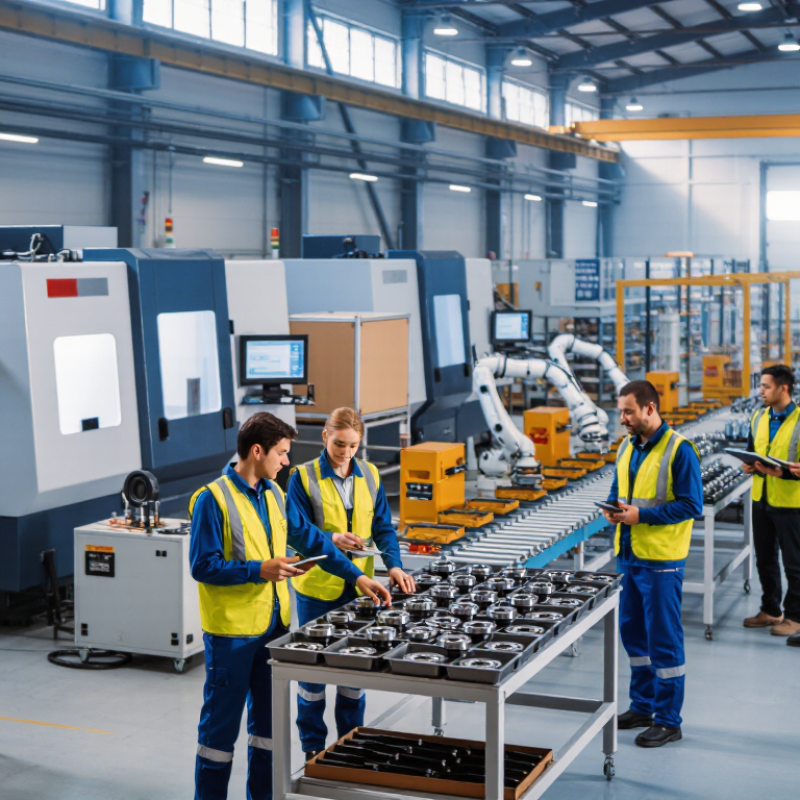
A spare parts manufacturer in China should do more than sell components from a catalogue. It should control or closely manage production, from material selection to final inspection. That distinction matters: a trading company may coordinate orders, but it may not operate the machines or verify every batch. Look for practical evidence, not polished claims. A factory visit, process records, and a small trial order can reveal how work is actually handled.
Technical capability shows in details. Can the supplier interpret drawings, hold specified tolerances, and explain how parts are tested? Ask for sample inspection reports, material certificates, and batch traceability records. Check whether measurements match the drawing, including hole spacing and surface finish. Reliable manufacturers also document changes and communicate delays early. Small signs count. Still, no checklist guarantees a smooth partnership, and audits can miss problems on a busy production day. Compare evidence across samples, records, and conversations, then judge whether the manufacturer can repeat the required quality at production scale.
The table below presents ten common spare-parts manufacturing specializations, not a ranked list of companies. A manufacturer is generally defined by its ability to produce specified replacement components and demonstrate material, process, inspection, and traceability controls.
| Manufacturing specialization | Typical spare parts | Common materials and processes | What to verify when assessing a supplier |
|---|---|---|---|
| 1. Machined components | Shafts, sleeves, bushings, housings, and precision brackets | Steel, stainless steel, aluminum, brass; CNC turning, milling, drilling, and grinding | Drawing and revision control, dimensional inspection records, material certificates, and measurement-equipment calibration |
| 2. Cast components | Pump bodies, valve bodies, covers, and equipment housings | Cast iron, steel, aluminum, and copper alloys; sand casting, die casting, or investment casting | Alloy identification, casting inspection, documented defect acceptance criteria, and any required nondestructive testing |
| 3. Forged components | Flanges, gears, connecting components, and high-load fittings | Carbon steel, alloy steel, and aluminum; closed-die or open-die forging followed by machining | Material traceability, heat-treatment records where specified, dimensional checks, and mechanical-test reports when required |
| 4. Sheet-metal parts | Brackets, panels, guards, enclosures, and mounting plates | Carbon steel, stainless steel, and aluminum sheet; laser cutting, punching, bending, welding, and finishing | Material grade and thickness, dimensional checks, weld inspection where applicable, and coating or finish specifications |
| 5. Plastic-molded parts | Covers, clips, knobs, housings, and equipment fittings | Thermoplastics such as ABS, polypropylene, and polyamide; injection molding and secondary machining or assembly | Resin specification, mold and part revision control, sample approval, dimensional inspection, and production-lot consistency |
| 6. Rubber and sealing products | O-rings, gaskets, oil seals, diaphragms, and vibration isolators | Elastomers such as NBR, EPDM, and silicone; compression, transfer, or injection molding | Compound and hardness specification, operating-temperature and media compatibility, dimensional checks, and batch identification |
| 7. Bearings and power-transmission parts | Rolling bearings, bushings, couplings, and selected gear components | Bearing steels, alloy steels, and engineering polymers; forming, heat treatment, grinding, and assembly | Part-number and interchangeability checks, dimensional and running tests, material or heat-treatment documentation, and packaging protection |
| 8. Fasteners and threaded parts | Bolts, nuts, screws, studs, pins, and washers | Carbon steel, alloy steel, stainless steel, and nonferrous alloys; cold heading, thread rolling, machining, and coating | Thread and dimensional inspection, specified strength grade, material traceability, and coating requirements such as corrosion testing when specified |
| 9. Filters and filtration components | Air, oil, fuel, and hydraulic filter elements and housings | Filter media, metal mesh, cellulose or synthetic media, steel, and plastics; pleating, forming, bonding, and assembly | Intended fluid or air application, stated filtration performance, sealing integrity, flow or pressure-test results where specified, and element dimensions |
| 10. Electrical and electromechanical parts | Switches, connectors, wiring assemblies, sensors, and motor-related replacement parts | Conductive metals, insulating polymers, and electronic components; stamping, molding, wiring, soldering, and assembly | Electrical ratings, connector and pin configuration, applicable product-safety requirements, inspection records, and functional-test results |