Leave Your Message

7 Tips for Choosing the Best Boat Anchor Winch?

Choosing a Boat Anchor Winch is less about buying the biggest unit and more about matching it to your boat, anchor, and usual conditions. A winch that looks powerful in a catalog may still strain if the anchor and chain are heavier than expected. Bow space matters, too: measure the mounting area and check how the rode will pass over the roller. Small details can become awkward at the dock.

This guide’s seven tips cover practical checks before you choose: working load, anchor and rode compatibility, winch type, electrical demand, controls, construction, and access to service parts. Compare the manufacturer’s specifications with your actual setup, including cable length and battery capacity. If possible, inspect the unit installed on a similar boat. Listen for smooth operation. Check the fasteners. These observations can reveal fit issues that a product photo misses.

Conditions vary. A sheltered marina and a windy anchorage do not place the same demands on equipment, and no single capacity figure tells the whole story. Leave a sensible margin, follow the maker’s installation guidance, and avoid treating the winch as a substitute for proper anchoring practice. It is easy to focus on price or pull rating alone; even experienced owners can overlook clearance or wiring. Use these tips as a careful starting point, then confirm the details for your boat.
7 Tips for Choosing the Best Boat Anchor Winch?

Define Boat Size, Bow Geometry, and Typical Anchoring Conditions

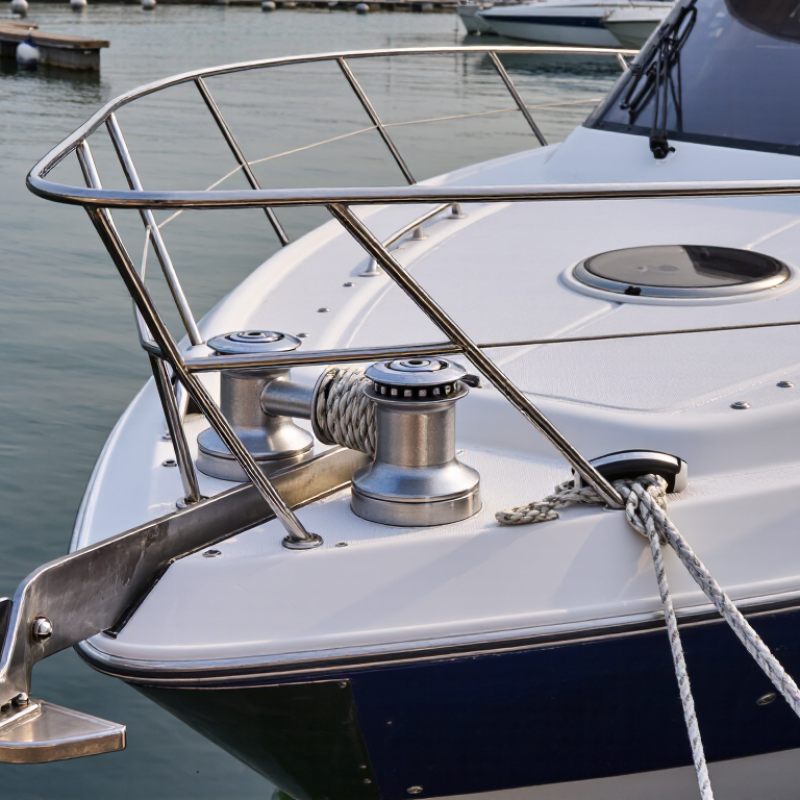
Choose an anchor winch only after defining the boat it must serve. Length is a starting point, not the whole answer; a heavy, fully loaded boat places different demands on the system than a lightly equipped one. Check the vessel’s displacement and the winch’s rated capacity, including the weight of the anchor and rode. Allow for the extra strain of retrieving gear in wind or current. Small details matter.

Measure the bow before choosing a winch. Note the space available, the angle of the bow roller, and whether the anchor can travel freely without striking the hull. A tight locker or awkward lead can cause poor handling, even when the winch has ample power. Measure twice. Then picture where the rode will run. Typical anchoring conditions matter just as much: sheltered water with a sandy bottom is not the same as an exposed anchorage with shifting wind, strong current, or a muddy seabed. These factors affect anchor choice, rode length, and retrieval effort. It is easy to focus on motor power and overlook fit; that is a mistake worth revisiting. Compare the winch specifications with your actual setup, and leave room for safe, unobstructed movement at the bow.
7 Tips for Choosing the Best Boat Anchor Winch

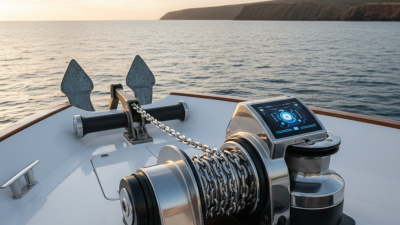
Estimate the rode length needed for different anchoring conditions before choosing a winch and planning your bow setup.

Rode length is commonly planned using a scope ratio of about 5:1 as a minimum, 7:1 for a more typical allowance, and up to 10:1 in challenging conditions. This illustration assumes the bow roller is 1 m above the water and uses water depths of 3, 5, and 8 m; actual scope should account for tide, bow height, seabed, weather, and the anchor system. Select a winch based on your boat’s size, anchor and rode weight, expected retrieval loads, and bow geometry—not rode length alone.

Apply the 3× Pull Guideline to Anchor-and-Rode Weight

Use the 3× pull guideline as a practical starting point: choose a windlass with a rated pull at least three times the combined anchor-and-rode weight. For example, a 35-pound anchor and 100 feet of chain weighing 1.5 pounds per foot total 185 pounds. That suggests a minimum rated pull of 555 pounds. Check the chain maker’s weight table; chain size changes the calculation. Keep working pull distinct from a windlass’s brief maximum pull.

ABYC H-40, the industry standard covering anchoring, mooring, and lifting devices, is a useful technical reference for equipment and installation checks. The 3× figure is a rule of thumb, not a guarantee for every hull or anchoring condition. NOAA’s Beaufort wind scale places gale-force winds at 34–47 knots, a reminder that environmental loads can rise sharply. It is not magic. Add a sensible margin for friction, a bow roller’s angle, and the weight of wet or fouled rode. Then compare the windlass rating with the boat’s actual setup, not just a catalog number. I would recheck the estimate after changing chain length or anchor size; that detail is easy to miss.

Match the Gypsy to Chain Size and ISO 4565 or DIN 766

A boat anchor winch depends on a precise fit between its gypsy and chain. The gypsy pockets must suit the chain’s diameter, link pitch, and shape. ISO 4565 and DIN 766 identify different chain specifications; their dimensions should not be assumed interchangeable. Check the chain marking and the winch documentation before choosing a gypsy.

Measure several links, not just one. Record the wire diameter, inside length, and inside width, then compare them with the gypsy’s stated compatibility. Small variations can make links ride unevenly or slip under load. Close is not enough. A chain may look right on the dock but bind when wet or under tension.

Ask the supplier to confirm the exact chain standard and size the gypsy supports. If the chain is unmarked, have its dimensions checked rather than guessing from appearance. Test the assembled system at low speed in a controlled setting, watching how each link seats and releases. A little extra checking now can prevent a frustrating jam when the anchor needs to come up.

Estimate Rode Handling from a 5:1–7:1 Scope

A windlass should handle the rode length your anchoring plan actually requires, not just the depth shown on a chart. Scope is the length of rode divided by the vertical distance from the bow roller to the seabed. BoatUS Foundation anchoring guidance commonly uses 5:1 as a working baseline, with 7:1 offering more catenary and holding margin when conditions allow. Include bow height and expected water-level rise in your estimate. NOAA CO-OPS tide predictions provide station-specific water-level data for that calculation.

For example, at 12 feet of water with the bow roller 3 feet above the surface, the working distance is about 15 feet. A 5:1 scope needs roughly 75 feet of rode; 7:1 needs about 105 feet. That difference matters when comparing a winch’s chain capacity, gypsy compatibility, and retrieval speed. Check the rode maker’s specifications too: chain size and rope construction affect fit and handling. A common planning mistake is sizing only for calm, low-tide conditions. There is no perfect shortcut. Leave room for a rising tide, and remember that a windlass retrieves rode; it should not take the vessel’s full anchoring load.

Compare 12 V and 24 V Systems, Duty Cycle, and Breaker Ratings

A 12 V anchor winch suits many boats already fitted with a 12 V battery system. A 24 V model can draw less current for the same power, which may reduce voltage drop on a long cable run. But voltage must match the winch and battery arrangement. Higher voltage is not automatically better.

Check the duty cycle, not just the advertised pulling capacity. A winch used for brief anchor retrieval has different cooling needs from one operated repeatedly in a busy anchorage. Mud, chain weight, and a tight rode can increase motor load. Leave recovery pauses when the manufacturer recommends them. Small details matter.

Choose a breaker rating from the winch manual and the cable specifications. The breaker protects the circuit wiring; it is not simply a switch sized to stop every brief startup surge. An undersized breaker may trip during normal retrieval, while an oversized one may leave the cable poorly protected. Measure the battery-to-winch cable route before choosing wire, since a few extra metres can affect voltage drop. It is easy to focus on motor power and overlook this. Check the actual installation, even if the calculation seems obvious.

7 Tips for Choosing the Best Boat Anchor Winch? - Compare 12 V and 24 V Systems, Duty Cycle, and Breaker Ratings
Tip Selection Factor 12 V System 24 V System What to Check Before Buying
1 Match the winch to the anchor gear Required pulling capacity depends on the anchor, chain or rope, boat size, and expected operating conditions. A winch’s rated pull is not the same as its holding capacity. Use the winch maker’s sizing guide for your boat and complete rode. Allow for the combined weight of the anchor and rode, and do not rely on the winch alone to hold the boat at anchor.
2 Choose a voltage compatible with the boat Often convenient on boats with an existing 12 V electrical system. At the same power, a 12 V motor draws about twice the current of a 24 V motor. Can deliver the same power at lower current than a 12 V system, but requires a compatible 24 V supply and correctly matched components. Check the winch’s rated voltage and the boat’s battery-bank configuration. Do not connect a winch to a different voltage unless its documentation explicitly permits it.
3 Account for current and cable length Higher current for equivalent power can require heavier conductors, especially over long cable runs. Lower current for equivalent power can reduce voltage drop for a given conductor size and cable length. Measure the full circuit length, including the outgoing and return paths. Select cable size using the winch maker’s chart and applicable marine electrical guidance.
4 Check duty cycle Duty cycle is product-specific. It describes permitted operating time relative to the required rest or cooling period; it cannot be inferred from voltage alone. Read the manual for maximum run time and cooling intervals. Choose a winch suited to the expected retrieval frequency, and avoid prolonged operation beyond its stated limits.
5 Size the breaker to the specification Breaker ratings vary by winch model, voltage, motor, and installation. There is no single correct breaker rating for all 12 V or all 24 V anchor winches. Use the specified breaker or fuse rating and type. The protective device must protect the circuit conductors while accommodating the motor’s starting current as directed by the manufacturer.
6 Verify installation and control compatibility Solenoids, switches, control wiring, and protective devices must match the winch’s voltage and wiring diagram. Confirm mounting orientation, deck thickness, access for servicing, and compatibility of the control system. Follow the supplied wiring diagram and marine installation instructions.
7 Plan for safe anchoring loads Wind, current, and vessel movement can place loads on the anchor rode that exceed the winch’s intended retrieval role. After setting the anchor, transfer the load to an appropriate chain stopper, cleat, or bridle as suitable for the installation. Inspect the rode and fittings regularly.
Important: Exact winch capacity, duty cycle, cable size, and breaker rating are model- and installation-specific. Confirm all values in the product manual and have the electrical installation checked against applicable marine standards.