Leave Your Message

How to Choose a Double Girder Gantry Crane in 2026?

How to Choose a Double Girder Gantry Crane in 2026?

Choosing a Double Girder Gantry Crane in 2026 requires more than comparing lifting capacities and prices. The right machine must match your site, workload, materials, and future production plans. A crane lifting steel coils outdoors faces different demands than one moving precast beams inside a factory. Wind, uneven ground, salt exposure, temperature changes, and limited headroom can affect every decision.

Craning specialist Mark Bridger offers a useful reminder: “Capacity is only useful when the whole system can support it.” This principle matters when selecting the main girders, hoists, end carriages, wheels, controls, and runway foundations. A 50-ton crane may appear suitable on paper. However, poor ground bearing, weak power supply, or unsuitable wheel loads can create expensive problems. Small details matter.

Experience should guide the evaluation. Review the actual load chart, duty classification, lifting frequency, span, travel distance, and required hook height. Ask whether the crane will operate continuously or only several times each week. Consider remote controls, variable-speed drives, anti-collision systems, overload protection, and emergency stop access. Maintenance access also deserves attention. A difficult inspection area may become a hidden operational cost.

Not every “high-capacity” design is the best choice. Sometimes, it is oversized. Sometimes, it is not. Buyers should compare lifecycle value, not only the purchase quotation. Supplier certifications, inspection records, spare-parts support, and commissioning experience can reveal more than polished brochures. This guide examines those practical factors and highlights common selection mistakes, including assumptions that deserve a second look.
How to Choose a Double Girder Gantry Crane in 2026?

Define the Lifting Requirements for a Double Girder Gantry Crane

Before selecting a double girder gantry crane, define what it must lift and how often. Record the heaviest load, including slings, spreader beams, and other attachments. A 20-tonne machine part may require greater capacity once its lifting gear is included. Do not estimate from memory. Check load records and drawings. Then note the load’s dimensions, lifting points, and center of gravity. An off-center load can swing or place uneven forces on the crane.

Next, map the work area. Measure the required span between rails, lifting height, and travel distance. Consider whether the crane must move a load over machinery, through a doorway, or across an outdoor yard. Specify the number of lifts per hour and expected shifts; occasional maintenance lifts demand different duty performance from repeated production cycles. Include the heaviest load’s travel path. Small details matter. I have seen teams focus on rated capacity and overlook low headroom or an obstructed route. That is easy to miss, and it can undermine an otherwise sound specification. If usage patterns are uncertain, document the uncertainty and ask a qualified crane professional to review the assumptions before setting the final requirements.


Compare Crane Designs, Capacities, and Operating Configurations

A double girder gantry crane can suit demanding outdoor work, but the right design depends on the load path and site layout. Top-running hoists travel on rails mounted above the girders, which can provide useful headroom. Under-running arrangements may help when building clearance or trolley access is limited. Measure the hook’s full lifting height, not just the distance between the ground and the girder.

Capacity is more than the heaviest item on a job sheet. Include lifting beams, slings, spreaders, and any attachments in the lifted load. A crane handling steel coils may need different trolley travel and positioning than one serving a fabrication bay. Consider span, lift height, duty cycle, and how often loads move. A larger rated capacity is not automatically safer if the runway, foundations, or operating pattern are not suited to it.

Operating configuration shapes daily use. A cabin can help operators who need a steady view across a large yard, while a pendant or radio control may suit shorter, varied tasks. Check travel speeds, braking behavior, wind exposure, and access for maintenance. On paper, a faster crane looks efficient. In practice, frequent stopping near columns or stacked materials can make controlled positioning more valuable. I would verify those details against actual site measurements; early layout assumptions are easy to get wrong.

How to Choose a Double Girder Gantry Crane in 2026? — Compare Crane Designs, Capacities, and Operating Configurations
Design / Configuration Typical Capacity Range Typical Span Range Typical Lift Height Operating Setup Key Benefits and Considerations Common Applications
Box-girder, full gantry 10–500 t or more 15–40 m or more 6–30 m, project-dependent Both legs travel on ground-level runway rails; hoist trolley runs on top of the girders. Robust, widely adaptable design with good torsional stiffness. Requires foundations and clear ground-level rail paths. Shipyards, precast concrete yards, steel plants, heavy fabrication, and large outdoor storage areas.
Truss-girder, full gantry 10–100 t, depending on span and duty 20–50 m or more, subject to engineering 6–20 m, project-dependent Full gantry supported by two legs, with the trolley traveling across the trussed bridge. Lower structural weight can be advantageous for long spans and outdoor use. Open construction needs consideration for wind, corrosion protection, and inspection access. Outdoor yards, bulk-material handling, port areas, and sites requiring long spans.
Semi-gantry, box-girder 5–100 t, depending on layout 10–35 m, project-dependent 6–20 m, project-dependent One side travels on a ground rail; the other runs on an elevated runway attached to a building or support structure. Can use existing building support on one side and leave floor space open beneath the elevated runway. Building structure and runway loads must be verified. Factories, warehouses, workshops, and facilities with an existing elevated runway on one side.
Rail-mounted gantry (RMG) 20–100 t or more, depending on spreader and duty 30–50 m or more, application-dependent Set by container or process requirements Runs on fixed rails, usually over a defined yard lane; may use a trolley, rotating trolley, or application-specific lifting attachment. Precise, repeatable travel on a fixed route and suited to frequent handling. Rail alignment, foundations, and route planning are important. Container terminals, intermodal yards, and repetitive material-handling lanes.
Rubber-tired gantry (RTG) Typically 20–60 t for container-handling duties; other capacities are application-specific Set by yard lane and lifting arrangement Set by stack height and load-handling requirements Travels on rubber tires rather than fixed runway rails; steering and power arrangements vary by design. Offers route flexibility and can serve multiple yard lanes. Tire loads, ground bearing capacity, steering, and operating clearances need assessment. Container yards and outdoor storage areas where flexible travel routes are useful.
High-duty double-girder gantry Selected to suit the load; commonly engineered for heavy or frequent service Selected to suit the work area Selected to suit the process and hook approach May use a main hoist plus auxiliary hoist, multiple trolleys, or specialized lifting equipment. Designed around demanding load cycles and process requirements. Capacity alone is not enough: duty classification, wheel loads, fatigue, and maintenance access also matter. Steelmaking, heavy engineering, shipbuilding, and continuous production environments.

Selection note: Capacity, span, lift height, speed, duty classification, and structural loads are interdependent. The ranges above are indicative planning values, not guaranteed ratings; confirm the final configuration through a site survey and project-specific engineering review.

Evaluate Site Conditions, Span, Height, and Runway Compatibility

Choosing a double girder gantry crane begins with the ground beneath it. Measure the working area, door clearances, nearby equipment, and the path of the heaviest load. Record the required span, hook height, and approach distance at both ends; a few centimeters can affect access to a machine or loading bay. Check soil capacity and pavement condition, too. A loaded crane travels on concentrated wheel loads, so a surface that looks sound may still need engineering review. ISO 12488-1 provides tolerance classes for crane and runway alignment; use its guidance with a qualified engineer’s site measurements, not as a substitute for them.

Span and lift height must match the actual work, not a future wish list. Include the load’s dimensions, lifting attachments, and clearance beneath roof trusses, lights, and sprinkler lines. Then verify that the runway or rail system can support the crane’s wheel loads and operating forces. OSHA’s overhead and gantry crane standard, 29 CFR 1910.179, requires runway and supporting structures to be designed to withstand crane loads; it also calls for periodic inspection of crane components at intervals of one to twelve months, depending on service. That range matters. Dust, outdoor exposure, and frequent travel may justify a tighter inspection plan. Site drawings can be wrong, so verify critical dimensions in person before fixing the specification.

How to Choose a Double Girder Gantry Crane in 2026?

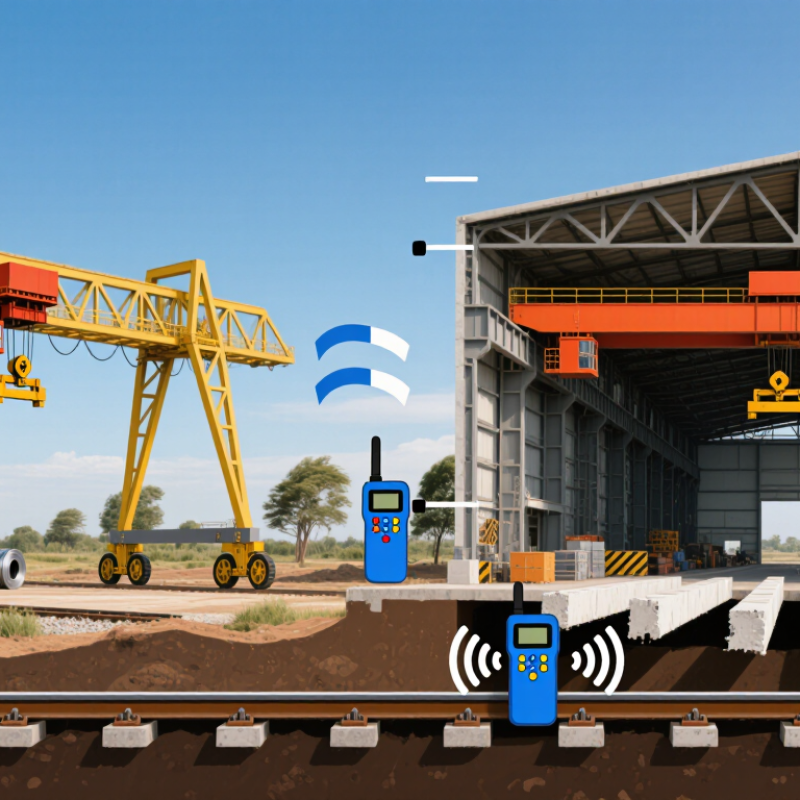
Evaluate site conditions, span, height, and runway compatibility before defining the crane specification.

The 1–5 ratings are an illustrative planning aid, not measured industry data. Confirm actual requirements through a site survey, load assessment, and structural review. Check runway alignment and capacity, available span and hook height, ground conditions, wind exposure, and operating environment.

Select Safety Systems, Controls, Power Options, and Custom Features

When choosing a double girder gantry crane in 2026, start with the load path and the work area. Safety systems should match real operating risks, not just a checklist. Consider overload protection, travel limits, emergency stops, and audible or visual warnings. Ask how the crane behaves during a power interruption. Test access to inspection points, too. A guard that is difficult to reach may be neglected. Small details matter.

Controls should suit the operator and the pace of the job. Pendant controls can work well for clear, close-range tasks, while a radio remote may improve visibility around long or awkward loads. Check response time, labeling, and how easily operators can stop motion. Keep controls intuitive. Confusing buttons invite mistakes. Power options depend on site layout, duty cycle, and available supply. Compare fixed feeds with cable reels or conductor systems, and account for weather, dust, and long travel distances. A technically suitable system can still be awkward in daily use.

Custom features should solve a specific problem. Variable-speed travel can help position steel sections near a workstation; special lifting attachments may suit repeated, defined loads. Provide the supplier with load dimensions, lift height, span, duty pattern, and site conditions. Verify that proposed changes preserve rated capacity and safe clearances. Not every customization pays off. I would question any feature that adds complexity without improving a measurable task. Revisit the specification with operators before approval; they often notice practical issues missed in drawings.

Review Suppliers, Compliance Standards, Maintenance, and Total Cost

Choosing a double girder gantry crane in 2026 means comparing more than lifting capacity. Ask suppliers for duty-cycle data, wheel loads, runway requirements, and a clear scope of supply. Request references for installations with similar spans and outdoor exposure. A polished brochure is not enough. Check how quickly the supplier can provide drawings, spare-part details, and technical support. Small omissions can become expensive later.

Review the compliance documents against the standards and regulations that apply at your installation site. Confirm that the design, electrical equipment, safety devices, and inspection plan are documented. Do not assume a certificate covers every configuration. It may not. Have a qualified engineer review unclear load charts or site assumptions before ordering. Record acceptance tests and keep inspection reports accessible to operators and maintenance staff.

Maintenance needs affect availability and cost. Compare access to hoists, brakes, wheels, and control panels; a hard-to-reach component can add hours to routine work. Ask for recommended inspection intervals, training, and realistic spare-part lead times. Then estimate total cost across the crane’s expected service life, including installation, energy, inspections, repairs, and downtime. The lowest purchase price can hide a costly service gap. Your estimate will still involve uncertainty, especially if production patterns change, so state those assumptions plainly.