What Are the Top Types of Semi Gantry Cranes in 2026?
In 2026, buyers comparing semi-gantry cranes need more than a list of names. They need to understand where each design fits, what it can lift, and how site conditions shape the choice. A Semigantry Crane typically has one leg running on a floor-level rail, while its opposite side travels along an elevated runway. This layout can make productive use of a building wall or existing support structure without requiring two full overhead runways. That sounds simple, but site layouts can complicate it.
Common types include single-girder and double-girder models, along with designs tailored for indoor workshops, outdoor yards, and specific travel requirements. Single-girder units may suit lighter loads and tighter spaces. Double-girder versions can support heavier duties or greater lifting heights, subject to the manufacturer’s design limits. Rail-mounted options offer a defined travel path; portable or adjustable configurations may suit changing work areas, where available. Small details matter.
This guide compares the leading semi-gantry crane types by structure, operating environment, and typical application. It also highlights practical selection factors, including rated capacity, span, lift height, duty cycle, floor condition, and available headroom. These details affect cost and performance, not just the crane’s name. Specifications vary between manufacturers, so buyers should verify load data and site requirements with qualified suppliers before choosing equipment. A category label alone is not enough. Real projects also reveal awkward constraints—columns, uneven floors, or limited clearance—that a neat product chart may not show. That is worth remembering.
How Semi-Gantry Cranes Are Classified in 2026
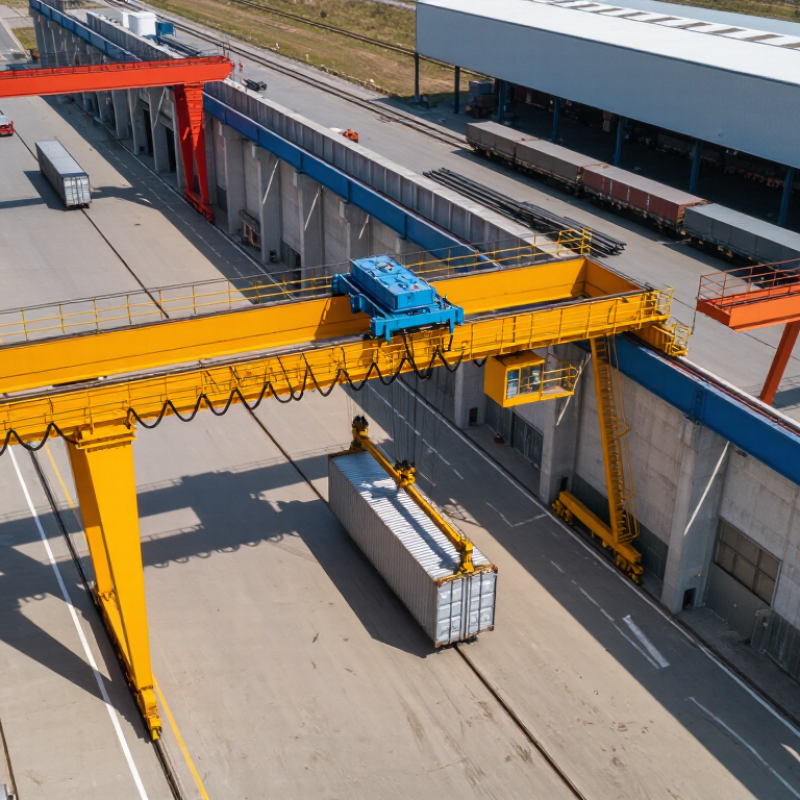
In 2026, semi-gantry cranes are best classified by structure, travel, duty, and working environment—not by lifting capacity alone. A single-leg model runs on a floor rail on one side and an elevated runway on the other. A double-leg arrangement uses two floor-supported legs, while portable versions can move between work areas. The main distinction is where each side carries its load. Check the building’s runway and floor before choosing; a small mismatch can become an expensive problem.
Duty class adds another useful layer. ISO 4301-1 groups cranes by total working cycles and load spectrum, helping buyers compare occasional maintenance lifts with frequent production handling. The Grand View Research 2024 global crane market report estimated the market at about US$42.6 billion in 2023 and projected 5.1% annual growth through 2030. That figure covers cranes broadly, not semi-gantry units specifically, but it signals sustained investment in material handling. Classification still needs site-level judgment.
Tips: Match the crane’s span, headroom, and rail layout to the actual bay. Record the heaviest load and expected lift frequency, including awkward, off-center loads. Then confirm whether indoor dust, outdoor wind, or uneven flooring changes the specification. Measure twice. A neat catalog category cannot replace a competent engineering review.
What Are the Top Types of Semi-Gantry Cranes in 2026? — How Semi-Gantry Cranes Are Classified in 2026
| Type or Classification |
How It Is Identified |
Typical Applications |
Key Selection Consideration |
| Single-Girder Semi-Gantry Crane |
Uses one main bridge girder. One side is supported by a leg or frame running on a floor-level rail; the other side runs on an elevated runway. |
Workshops, maintenance areas, and production spaces where loads and lifting height suit a single-girder layout. |
Check required load capacity, span, headroom, hoist arrangement, and the building’s runway support. |
| Double-Girder Semi-Gantry Crane |
Uses two main bridge girders connected to the semi-gantry support structure. |
Industrial areas that need a higher hook position, a trolley running on top of the girders, or a configuration suited to heavier service. |
Compare structural requirements, available headroom, trolley design, and the crane’s specified duty classification. |
| Non-Cantilevered Semi-Gantry Crane |
The bridge girders span between the support points without extending beyond them as a cantilever. |
Sites where the lifting area lies mainly within the crane’s support span. |
Confirm that the required hook coverage does not extend beyond the usable span. |
| Cantilevered Semi-Gantry Crane |
One or both ends of the bridge extend beyond a supporting leg, creating a cantilevered portion. |
Layouts requiring additional hook coverage near an edge, doorway, or adjacent work area. |
Review cantilever reach, load position, structural design, and the resulting support reactions. |
| Rail-Mounted Semi-Gantry Crane |
The ground-supported side travels along a floor rail, while the opposite side runs on an elevated runway. |
Defined travel paths in factories, storage areas, and outdoor or indoor work zones with prepared rail foundations. |
Assess rail alignment, foundation capacity, travel limits, and coordination with the elevated runway. |
| Duty-Classified Semi-Gantry Crane |
Classified by its expected operating frequency, load spectrum, and service conditions rather than by girder count. |
Applications ranging from occasional handling to frequent production lifting. |
Have the duty class selected from the actual operating cycle and applicable design requirements; it is not determined by the crane’s name alone. |
Classification note: These categories can overlap. For example, a crane may be both double-girder and cantilevered, as well as rail-mounted. Capacity, span, lift, and duty class are project-specific and should be confirmed through engineering design.
Single-Girder Semi-Gantry Cranes: Structure and Uses
A single-girder semi-gantry crane has one bridge girder, with one end carried by a leg running on a floor-level rail. The opposite end travels on an elevated runway, often attached to a building column. This mixed support can serve a work bay where one side lacks a full overhead runway. It can also leave floor space open for carts and fixtures.
A real constraint: the floor rail needs a clear, level path, and the building-side support still needs a proper structural check.
The girder carries the hoist and trolley across the span, so load capacity, span, lift height, and duty cycle must be assessed together. ISO 4301-1 provides a classification framework based on load spectrum and operating cycles; a label alone does not show how a crane will perform in a specific shop.
The U.S. Bureau of Labor Statistics recorded 5,283 fatal work injuries across all industries in 2023, according to its Census of Fatal Occupational Injuries. That figure is not crane-specific, but it reinforces the need for disciplined lift planning and operator training.
Small details matter. A trolley approaching a column, a blind corner, or a rail joint can complicate routine moves.
Single-girder semi-gantry cranes often suit fabrication bays, maintenance areas, and warehouses with uneven building access, though the layout should be checked against actual loads and travel paths before selection.
Double-Girder Semi-Gantry Cranes: Capacity and Applications
Double-girder semi-gantry cranes suit sites that need substantial lifting capacity without a full gantry structure. One side travels on a floor-level rail; the other runs on an elevated runway. Two bridge girders support the trolley, helping manage heavier loads and wider working spans. Actual capacity depends on span, duty cycle, hoist design, and supporting structure, so a single headline rating tells only part of the story.
In 2026, these cranes remain useful in steel fabrication shops, equipment assembly areas, and outdoor storage yards. A crane may lift plate bundles near a building wall while leaving the center aisle open for forklifts. The double-girder layout can also provide room for maintenance access or auxiliary lifting equipment. Not always. Site conditions matter: uneven floor rails, limited headroom, or an undersized runway can restrict safe operation even when the crane itself has ample capacity.
A practical specification should reflect the heaviest routine load, not just an occasional peak lift. Include the load’s shape, lifting points, travel distance, and expected operating frequency. A long steel beam can sway or twist during travel, so controlled acceleration and careful rigging deserve attention. That detail is easy to overlook. Engineers should verify runway reactions and rail alignment before installation, then inspect wear and braking performance through regular maintenance.
Portable and Adjustable Semi-Gantry Crane Designs
Portable and adjustable semi-gantry cranes suit workshops where floor space, access, or lifting stations change. One side travels on a floor-level rail; the other runs on an elevated runway. Some modular designs can be relocated between work areas, but portability does not mean moving a crane while it carries a load. Check the manufacturer’s rated capacity, wheel or rail arrangement, floor strength, and operating limits before use.
Adjustable models may use telescoping legs, pinned height settings, or configurable spans. These features help clear a machine enclosure or position a hook over a workbench. Make adjustments with the crane unloaded, and verify that every lock is seated before lifting. Small details matter: an uneven floor or skewed travel path can make the frame bind. Grand View Research estimated the overall global crane market at USD 33.8 billion in 2023, with a projected 4.3% compound annual growth rate from 2024 to 2030. That market-wide figure does not isolate semi-gantry cranes, but it reflects continued demand for lifting equipment. In practice, buyers should compare the required hook height, travel distance, load pattern, and relocation frequency. A lighter, portable frame can be useful; it may also offer less capacity or stiffness than a fixed installation. Check the numbers, not just the convenience.
Top Semi-Gantry Crane Design Types in 2026
A feature-based overview of portable, adjustable, and girder-style designs.
Each colored marker identifies a defining feature, not a performance rating. Design options can overlap: a portable or height-adjustable crane may also use a single- or double-girder bridge. Confirm capacity, span, and adjustment range against the specific crane’s specifications.
How to Match a Semi-Gantry Crane to Its Worksite
A semi-gantry crane suits a site where one runway can use a building column or wall, while the other leg runs on a floor rail. Match that arrangement to the actual structure: check column strength, rail alignment, floor condition, and available headroom. A single-girder design can suit lighter, routine lifts with limited overhead space. Heavier loads or wider spans may call for a double girder, but its added height and weight need room and suitable supports. Measure twice.
For a busy indoor bay, consider how the crane shares space with forklifts, doors, and workstations. On an outdoor yard, assess drainage, rail foundations, wind exposure, and whether the crane must travel between work areas. A rubber-tired design offers movement without fixed rails, though uneven paving can complicate precise positioning. A neat site drawing can still mislead; observe the route with the load at its real height.
The Material Handling Industry’s 2024 Annual Industry Report found that 55% of surveyed organizations planned to increase supply-chain technology investment over five years. That signals growing interest in modern material handling, but automation is not a substitute for site checks. Record load weight, lift frequency, travel distance, and the heaviest lift before selecting capacity and duty class. Then confirm clearances and operating conditions with a qualified crane professional. The overlooked detail is often the floor: a rail that looks straight may settle under repeated loading.