Leave Your Message

What Is the Best Wrecking Ball Crane in 2026?

Choosing the best Wrecking Ball Crane in 2026 depends on the demolition job, not a single headline specification. A crane suited to a low-rise concrete structure may be a poor match for a confined site or a different building material. The right comparison starts with the required reach, operating radius, boom configuration, and approved ball weight. It also considers ground conditions, setup space, and how the machine will reach the site. Small details matter. A narrow access road can rule out an otherwise capable crane.

This guide compares crane types and practical selection factors, including rated capacity, stability features, braking systems, maintenance access, parts availability, and manufacturer support. Specifications should be checked against current manufacturer documentation and the planned configuration; capacity can change with radius and setup. A brochure number is not the whole story. A qualified demolition and lifting team should assess the structure, site, and equipment before work begins, using an engineered plan and applicable safety requirements. That can sound obvious, yet it is easy to focus on reach and overlook setup constraints. No model is best for every project. The strongest choice is the one that fits the documented job requirements, can be supported locally, and is operated by trained professionals. We will also note where available information leaves room for doubt, because a confident ranking is not useful if its assumptions are unclear.
What Is the Best Wrecking Ball Crane in 2026?

What a Wrecking Ball Crane Is and How It Works

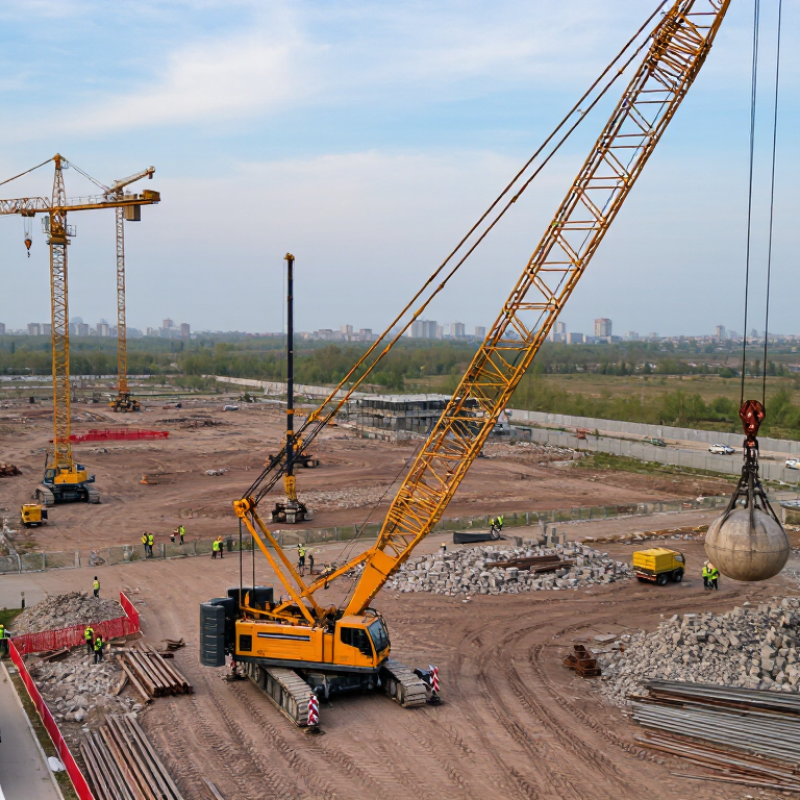
A wrecking-ball crane uses a heavy steel ball suspended from a crane’s hoist line. The operator raises and positions it, then controls its swing against masonry or concrete. Impact fractures the material; repeated strikes bring down sections. It is a blunt tool. Its usefulness depends on clear space, predictable structure, and careful control—not simply ball weight.

OSHA’s demolition standard, 29 CFR 1926.859, limits the ball’s weight to 50 percent of the crane’s rated load for the boom length and operating angle. That limit matters because the crane must manage dynamic forces, not just a hanging load. The right machine therefore needs suitable capacity at the working radius, stable setup, and enough boom clearance. A ball may appear easy to aim from the cab, but rebound and swing can be harder to judge on site.

For 2026, “best” means a crane matched to the structure and demolition plan, with capacity verified by qualified personnel. The U.S. Bureau of Labor Statistics recorded 1,075 fatal work injuries among construction and extraction workers in 2023; the figure covers many tasks, not wrecking-ball work alone. It still underscores why exclusion zones, inspections, and competent rigging deserve as much attention as production speed. Even a well-chosen crane cannot make an uncertain structure predictable.
Key Crane Types and Wrecking Ball Components

What Is the Best Wrecking Ball Crane in 2026?
Key Crane Types and Wrecking Ball Components

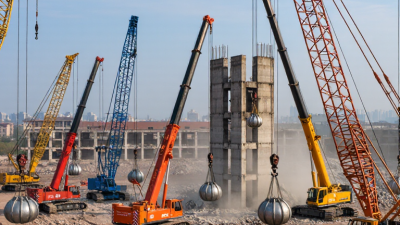
The right crane depends on the structure, site access, and demolition plan. Heavy crawler cranes are often considered for wrecking-ball work because their tracks support stability on prepared ground. Lattice-boom designs can provide reach and lifting capacity, but require careful setup and sufficient space. Some mobile cranes offer easier transport, though their suitability depends on the manufacturer’s limits and the planned operating radius. “Best” is not a fixed answer. It can be a misleading label.

A wrecking-ball setup includes more than the crane and ball. The boom, hoist, wire ropes, connection hardware, and load-control system must work together within approved specifications. The ball’s mass and shape affect how it moves and strikes; even a small change matters. Operators and qualified engineers should verify equipment condition, site conditions, and the demolition sequence before work begins. Clear exclusion zones are essential. So is communication. A worn rope or poorly assessed swing path can change the risk quickly. Older methods may look simple from a distance, but real sites rarely behave perfectly. That is worth remembering.

What Is the Best Wrecking Ball Crane in 2026? — Key Crane Types and Wrecking Ball Components

Category Type or Component Role and Typical Use Selection Guidance Key Considerations
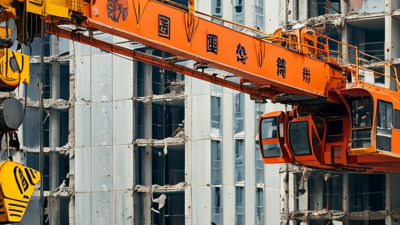
Crane type Lattice-boom crawler crane Tracks support the crane on site, while a lattice boom provides reach for controlled suspended-load work. This is generally the most suitable crane category when a wrecking ball method is specifically engineered and permitted. Consider it where the site has adequate ground capacity, room for crawler assembly, and sufficient working clearance. Capacity depends on the crane configuration, boom length, operating radius, and load chart. The suspended ball creates dynamic forces that must be included in the engineering and operating plan.
Crane type Truck-mounted telescopic crane Offers road mobility and a telescoping boom, but is not automatically suitable for repeated wrecking-ball impacts. Use only if the crane manufacturer’s instructions, load chart, and a qualified engineering review support the intended operation. Many mobile cranes are designed for controlled lifting, not impact loading. Do not assume ordinary lifting capacity ratings apply to wrecking-ball work.
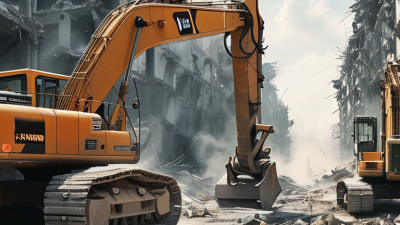
Crane type High-reach demolition excavator (alternative) Uses a purpose-built boom and attachment to dismantle structures progressively. It is commonly favored for controlled modern demolition rather than a suspended wrecking ball. Often a better choice where selective removal, controlled debris placement, or reduced impact is required. Reach, attachment weight, machine stability, and the demolition sequence must be checked against the machine’s approved configuration.
Wrecking-ball component Forged or cast steel ball Provides the impact mass. Ball shape, mass, and attachment arrangement affect how the tool behaves. Select only as part of a project-specific demolition and crane-engineering plan; there is no single best ball size for every structure. Ball mass is a suspended load and must be included with all rigging in crane-capacity checks. The ball must be inspected for damage, deformation, and secure attachment.
Wrecking-ball component Suspension wire rope Connects the ball assembly to the crane hoist system and carries the suspended load. Use a rope and termination arrangement selected for the specific crane, reeving, load, and approved operating method. Inspect and maintain it under applicable requirements and manufacturer guidance. Abrasion, broken wires, corrosion, kinks, or damaged terminations require assessment before use.
Wrecking-ball component Connecting hardware and terminations Link the ball to the suspension system and transfer load through the assembly. Use compatible, rated components with a connection design reviewed for the intended service. Do not substitute unverified shackles, links, swivels, or field-made connections. Dynamic loading and rotation behavior require competent engineering review.
Crane system Hoist, sheaves, boom, and reeving Raise, lower, and position the suspended assembly. The crane’s full lifting system—not just its headline capacity—determines whether a configuration is suitable. Confirm the exact boom, reeving, radius, counterweight, and operating configuration against the crane documentation and approved plan. Impact and sudden movement can produce forces beyond ordinary static lifting conditions. Follow manufacturer limits and the engineered demolition procedure.
Site planning Ground support and exclusion zone Support crane stability and keep workers and the public away from the operating and debris-fall areas. Have ground conditions assessed and establish controlled access, clear communication, and an exclusion zone before work begins. Plan for underground services, nearby structures, overhead hazards, flying debris, and emergency access. Follow applicable local regulations and site safety rules.

Practical conclusion: When a wrecking ball is specifically required, a properly configured lattice-boom crawler crane is generally the most appropriate starting point—not a universal recommendation. The safest and most effective demolition method depends on structural conditions, site constraints, engineering review, crane documentation, and applicable regulations. Many projects are better served by a purpose-built demolition excavator or another controlled dismantling method.

How to Evaluate the Best Wrecking Ball Crane in 2026

The best wrecking ball crane in 2026 is not simply the machine with the highest lifting capacity. Look for a crane specifically designed and approved for impact demolition, or a configuration reviewed by qualified engineering professionals. A wrecking ball creates shock and side loads that ordinary lifting charts may not cover. Check the permitted ball weight, working radius, boom setup, and operating limits together. Capacity alone can mislead.

Match the crane to the actual site. Measure the swing area, check ground strength, and identify buried services, nearby structures, and overhead obstacles. Clear sight lines matter. The operator should be able to track the ball and communicate with a trained ground team. Ask how exclusion zones will be maintained and how the work plan addresses changing demolition conditions. Local safety requirements also need review.

Inspect maintenance records for wire ropes, brakes, pins, and boom components, and confirm that parts and service support are available. Compare transport, setup, fuel, and downtime costs, not just the purchase price. Cheap can become expensive. I would still question any “best” claim that ignores the building material, site access, or operator experience. The right choice depends on documented engineering limits and a realistic site assessment, not a headline specification.

Comparing Capacity, Reach, Stability, and Operating Costs

A suitable wrecking-ball crane is not simply the machine with the highest rated capacity. The ball, rigging, boom configuration, and working radius all affect the permitted load. A longer reach can reduce repositioning, but capacity generally falls as radius increases. Check the load chart for the exact setup, then have qualified personnel assess impact forces; a swinging ball creates demands beyond a static lift. There is no universal winner.

Stability is equally important. OSHA’s construction crane standard, 29 CFR 1926.1402, requires ground conditions to support the equipment and its loads. Soft fill, buried services, or a slight slope can undermine an otherwise capable crane. Inspect the working area and confirm suitable support before operation. Small details matter.

Operating costs also change the comparison. The U.S. Energy Information Administration’s 2024 annual on-highway diesel series averaged about $3.76 per gallon, making fuel use a meaningful cost to track. Compare expected fuel consumption, transport, setup time, maintenance, and idle hours—not just the hourly hire rate. A crane with greater capacity may cost more to move and operate, while a smaller unit may need frequent repositioning. Track actual fuel and setup hours on comparable jobs; estimates are useful, but they are not always right.

Safety Requirements and Suitable Demolition Applications

The best wrecking-ball crane in 2026 is not simply the largest one. It is a crane matched to the structure, site access, and demolition sequence. A qualified engineer should assess the building, nearby structures, ground conditions, and overhead hazards before work begins. Wrecking balls suit robust, unoccupied masonry or concrete structures where controlled, broad impact is appropriate. They are usually a poor choice for delicate, confined, or highly precise demolition. No setup fits every site.

Safety starts with a documented plan and a competent operator. Inspect the crane, boom, wire rope, ball, and connections before each shift, and follow rated limits and equipment instructions. Establish a secure exclusion zone; keep workers and the public clear of the ball’s path and potential debris. Check utilities, wind, visibility, dust, and vibration risks. Monitor nearby structures during work. Small details matter. A tidy plan can still overlook a weak patch of ground, so reassess when site conditions change.

Tips: Confirm ground support and clearances before setup. Use a spotter, agree on clear signals, and stop if the load swings unpredictably. Keep inspection records, and review the plan after any unusual impact.