Leave Your Message

Top 10 Side Loader Crane Manufacturers for Global Buyers

Choosing the right Side Loader Crane manufacturer can shape an entire lifting operation. Global buyers often compare more than price, especially when handling containers in ports, logistics yards, construction sites, or remote industrial projects. A reliable supplier should demonstrate verified production experience, consistent engineering standards, responsive support, and clear documentation.

This guide examines ten leading manufacturers from a buyer’s practical perspective. It considers lifting capacity, outreach, hydraulic stability, chassis compatibility, control systems, safety features, customization options, and after-sales service. Real purchasing decisions often depend on small details. For example, a reinforced boom may reduce deformation during repeated cycles. A well-positioned control panel can improve visibility beside a loaded container. Spare-parts availability may matter more than a polished brochure.

Performance matters.

The selected manufacturers represent different strengths, production scales, and regional advantages. Some focus on heavy-duty port equipment, while others provide compact solutions for transport fleets or specialized sites. Their certifications, testing procedures, warranty terms, and installation support also deserve careful review. Buyers should verify technical claims independently and request operating references where possible.

No ranking can fit every project perfectly. That is a limitation worth acknowledging. A manufacturer with excellent high-capacity equipment may not suit a small fleet with strict road-weight limits. Likewise, a competitively priced crane may create higher maintenance costs over time. By comparing measurable specifications with field experience, international buyers can narrow their options and choose a Side Loader Crane partner with greater confidence.
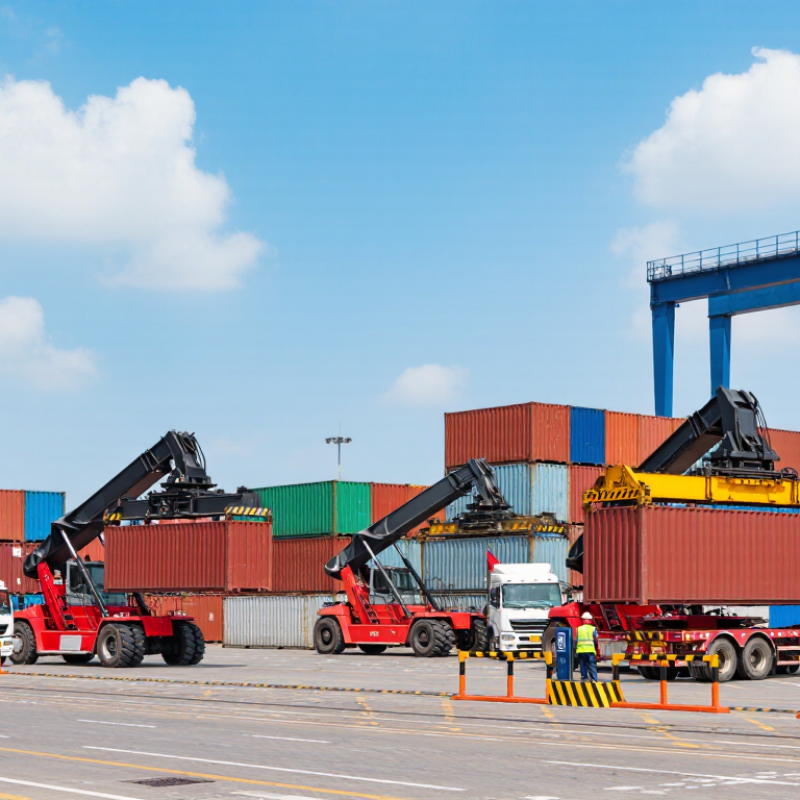
Top 10 Side Loader Crane Manufacturers for Global Buyers

What Is a Side Loader Crane and How Does It Work?

Top 10 Side Loader Crane Manufacturers for Global Buyers

What Is a Side Loader Crane and How Does It Work?

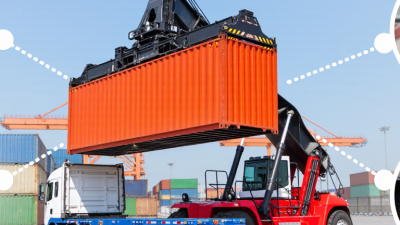
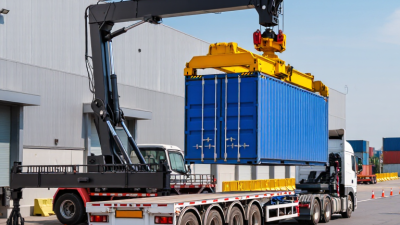
A side loader crane is a truck-mounted lifting system for moving containers beside the vehicle. Its hydraulic boom extends sideways, while a spreader locks onto the container’s corner castings. Stabilizing legs transfer force to the ground. The operator then lifts, shifts, and places the box with controlled hydraulic movement. No external crane is normally required. That saves setup time at yards, farms, and remote sites.

The World Bank’s 2023 Logistics Performance Index surveyed 4,090 professionals across 139 economies. It identifies reliability and delivery timeliness as important logistics performance factors. A well-designed side loader supports both, but ground conditions remain a serious weakness. Uneven gravel can alter the load angle. Wind can also reduce control. ISO 3874 handling principles and manufacturer load charts should guide every lift. Operators need practical training, not only a certificate.

Tips: Check the combined container weight, boom radius, and ground bearing capacity before loading. Inspect hydraulic hoses, locking pins, outriggers, and alarms each shift. Keep bystanders outside the working zone. Data from UNCTAD’s Review of Maritime Transport 2024 shows continuing pressure on global container logistics, yet faster equipment is not always safer equipment. This is where buyers may misjudge the purchase. A lower-priced crane can create higher downtime through weak service support, difficult parts access, or poor training. Reliable performance depends on the complete lifting system.
How to Compare Side Loader Crane Manufacturers Worldwide

Choosing among the top 10 side loader crane manufacturers requires more than comparing lifting capacity. A reliable evaluation begins with the crane’s working environment. Check rated load charts, maximum reach, turning radius, hydraulic response, and container compatibility. Ask whether each figure was tested under realistic conditions, including uneven yards and frequent loading cycles. A polished brochure can still hide weak details.

Manufacturer experience matters, but practical support matters more. Review factory inspection records, operator training, spare-parts availability, and maintenance response times. Request references from buyers using similar container sizes and road conditions. Compare warranty coverage carefully. A low purchase price may become expensive when seals, sensors, or hydraulic components are difficult to source locally. Independent certifications and documented quality procedures also improve confidence, though paperwork alone cannot prove field performance.

Tips: Build a comparison sheet with capacity, fuel or energy use, delivery time, warranty terms, and service coverage. Ask for a live demonstration or a verified operating video. Inspect welds, hose routing, control visibility, and emergency-stop access. Leave room for doubt. Some suppliers may provide incomplete data, and buyers may overlook operator comfort during price negotiations. That mistake can affect safety, productivity, and long-term ownership costs.

Top 10 Side Loader Crane Manufacturers and Their Core Strengths

Top 10 Side Loader Crane Manufacturers for Global Buyers

The top ten side loader crane manufacturers compete through practical strengths, not catalog size alone. Their strongest differentiators include hydraulic stability, compact chassis design, payload accuracy, and reliable control systems. MarketsandMarkets reports that the global crane market could grow from about USD 36 billion in 2024 to more than USD 46 billion by 2029. This expansion increases pressure on manufacturers to improve efficiency without weakening serviceability.

Hydraulic engineering remains a core strength for established producers. Well-designed lifting arms should operate smoothly beside narrow roads, uneven loading areas, and crowded depots. Leading manufacturers also emphasize corrosion-resistant frames, reinforced outriggers, and remote diagnostics. These features reduce downtime during municipal, industrial, and logistics operations. According to the International Energy Agency, electric trucks are gaining attention as operating costs and emissions targets influence fleet planning. Some crane producers now support electric or hybrid vehicle platforms, although charging access remains inconsistent.

After-sales support separates strong suppliers from merely capable fabricators. Buyers should examine spare-parts response times, technician coverage, training quality, and documented load-testing procedures. Digital monitoring is useful, but it is not magic. Sensors can fail, and operators still need practical training. No ranking is perfect. A manufacturer with excellent lifting performance may have weaker regional support. Global buyers should compare proven field performance, total ownership cost, local compliance, and repair access before signing a purchase contract.

Top 10 Side Loader Crane Manufacturers for Global Buyers - Top 10 Side Loader Crane Manufacturers and Their Core Strengths

Comparative overview based on commonly published side-loader specifications, engineering capabilities, and global application requirements

No. Manufacturer Profile Primary Market Base Typical Container Compatibility Typical Rated Load Core Strength Notable Engineering Features Best-Fit Applications
1 European Heavy-Duty Specialist Western Europe 20 ft, 30 ft, 40 ft and 40 ft high-cube containers 30–40 t High-load transport and frequent commercial operation Reinforced chassis integration, hydraulic stabilizers, remote-control operation, and road-compliant safety systems Intermodal logistics, construction materials, and container depots
2 Northern European Modular Builder Northern Europe 20 ft, 30 ft and 40 ft containers 25–35 t Compact vehicle design and urban maneuverability Low overall height, narrow operating footprint, short loading cycle, and modular lifting assemblies Urban deliveries, restricted-access sites, and regional haulage
3 Southern European Custom Engineering Specialist Southern Europe 20 ft to 40 ft containers, including specialized units 25–40 t Customized body layouts and vehicle mounting solutions Tailored hydraulic circuits, adjustable container locks, customized wheelbases, and application-specific controls Special cargo transport, mixed fleets, and export vehicle projects
4 British Isles Fleet-Oriented Manufacturer United Kingdom and Ireland 20 ft, 30 ft and 40 ft containers 25–35 t Fleet standardization and after-sales service support Driver-friendly controls, serviceable hydraulic components, safety interlocks, and body configurations for local regulations Waste logistics, rental fleets, distribution, and municipal services
5 North American Long-Haul Specialist United States and Canada 20 ft, 40 ft and 40 ft high-cube containers 30–45 t Long-distance container hauling and high payload capability Heavy-duty truck integration, extended chassis options, robust twist-lock systems, and highway-oriented braking packages Port drayage, long-haul logistics, energy projects, and industrial transport
6 Australian Outback-Ready Manufacturer Australia and New Zealand 20 ft, 30 ft and 40 ft containers 25–40 t Operation in remote, rough, and high-temperature environments High-clearance chassis options, corrosion protection, heavy-duty hydraulics, and dust-resistant component selection Mining support, remote construction, agricultural logistics, and infrastructure projects
7 East Asian High-Volume Manufacturer East Asia 20 ft, 30 ft and 40 ft containers 20–35 t Production scalability and export-oriented customization Standardized modular assemblies, multiple truck-platform options, hydraulic or electro-hydraulic controls, and configurable container locks International fleet procurement, logistics parks, and cost-sensitive projects
8 Turkish Regional Export Manufacturer Türkiye and surrounding markets 20 ft, 30 ft and 40 ft containers 25–35 t Flexible export configurations and competitive project pricing Adaptable mounting systems, regional chassis compatibility, hydraulic side-shift options, and multilingual technical documentation European, Middle Eastern, and North African logistics operations
9 South African Mining and Industrial Specialist Southern Africa 20 ft and 40 ft containers 30–40 t Durability for heavy industrial and off-road support work Reinforced frames, stabilizer legs for uneven ground, high-cycle hydraulic components, and service-accessible layouts Mining, industrial maintenance, remote infrastructure, and heavy equipment support
10 Multi-Region OEM Integration Specialist Global export markets 20 ft to 40 ft containers, subject to chassis and payload limits 20–40 t Integration with different truck platforms and local compliance requirements Chassis engineering, electrical integration, remote diagnostics, customized controls, and documentation for multiple regulatory markets International tenders, mixed truck fleets, and turnkey logistics projects

Note: Rated loads and container compatibility are typical market ranges for comparable side-loader configurations. Actual capacity depends on chassis specification, axle limits, lifting geometry, container condition, road regulations, and operating conditions.

Which Specifications and Standards Matter to Global Buyers?

Top 10 Side Loader Crane Manufacturers for Global Buyers

Global buyers should compare specifications before comparing prices. UNCTAD’s Review of Maritime Transport 2024 states that ships carry over 80% of world merchandise trade by volume. This makes reliable container handling equipment essential across ports, depots, and remote sites.

Check safe working load, lifting height, outreach, hydraulic pressure, and container compatibility. The crane should support standard ISO containers, including 20-foot and 40-foot units.

ISO 668 and ISO 1496 define important container dimensions and ratings. ISO 4301 helps classify crane duty cycles, while ISO 9927 supports inspection procedures. ISO 12480-1 also provides guidance for safe crane operation.

For road use, confirm axle loads, braking requirements, lighting, and local vehicle approvals. A strong frame is useful. It is not enough. Buyers should request load-test records, fatigue calculations, emergency-stop details, and corrosion-protection specifications.

Tips: Compare rated capacity at maximum outreach, not only the headline lifting figure. Ask for independent test certificates and service-part lead times. Verify whether CE marking, UKCA, or another regional conformity route applies.

The World Bank’s Logistics Performance Index 2023 highlights reliability as a major supply-chain concern. That supports choosing documented performance over attractive brochures. I would also inspect hose routing and weld quality personally. Small weaknesses often become expensive downtime.

Some specifications remain unclear across suppliers, so buyers should challenge every unsupported claim.

How to Evaluate Suppliers, Pricing, Delivery, and After-Sales Support

Choosing a side loader crane supplier requires more than comparing catalog photos. Review lifting capacity, outreach, mounting dimensions, hydraulic configuration, and documented test procedures. Ask for recent project references in climates similar to yours. A supplier with field experience should explain failures, not only display successful installations. Request certificates, inspection records, and a clear explanation of design margins. Technical confidence matters. So does honesty.

Pricing should separate the crane, chassis integration, shipping, commissioning, spare parts, and taxes. A low quotation may exclude control upgrades or site training. Ask for a line-by-line offer with currency, validity period, payment stages, and warranty exclusions. Delivery promises need evidence. Check production lead time, port handling, packaging standards, and contingency plans for delayed components. Require milestone photos and serial-number records before shipment. Dates alone are not proof.

After-sales support often decides whether equipment earns money or sits idle. Confirm response times, remote diagnostics, technician availability, and spare-part stock in your region. Clarify who pays for travel, labor, and replacement components during warranty repairs. Request maintenance schedules using practical intervals, such as hose inspections after heavy shifts. Speak with service customers, not just sales contacts. My own caution: even careful evaluation can miss hidden integration problems. Keep a risk allowance and document every assumption before signing.