Leave Your Message

What Is a Double Girder Gantry Crane?

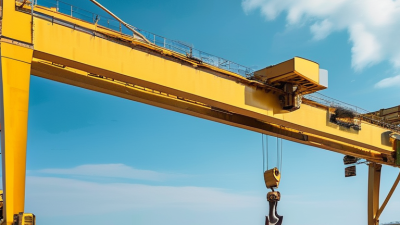
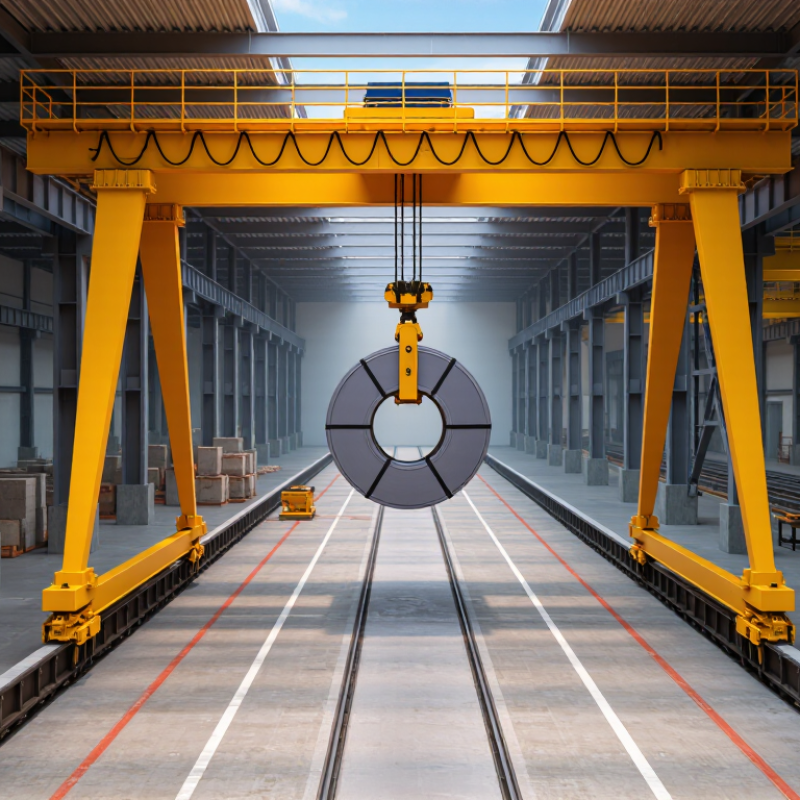
A Double Girder Gantry Crane is built for demanding lifts where capacity, span, and headroom matter. Two bridge girders support the trolley and hoist, while legs carry the structure along ground-level rails. Picture a steel coil moving across a fabrication bay, or a concrete beam being positioned outdoors. The second girder can provide greater lifting capacity and hook height than many single-girder designs, though the right choice depends on the actual duty cycle and site layout.

The scale of the wider crane business offers useful context, but not a direct measure of gantry-crane sales. Grand View Research valued the global crane market at about US$33.6 billion in 2022 and forecast growth through 2030. That estimate covers multiple crane types. It should not be mistaken for a double-girder market figure. For engineering perspective, Donald E. Dickie, author of Crane Handbook, emphasizes matching crane design to load, service conditions, and operating environment. That principle matters more than simply choosing the largest rated capacity. A heavier crane can add cost and structural demands without improving a poorly planned lift.

This guide explains the main components, operating principles, and common applications of a Double Girder Gantry Crane. It also considers selection factors such as span, lift height, load spectrum, and outdoor exposure. The details matter. A small mismatch in wheel alignment or runway planning can become a recurring maintenance problem. Crane selection is not always tidy; real sites often force compromises. The useful question is whether the design safely fits the work, day after day.
What Is a Double Girder Gantry Crane?

Definition and Basic Structure of a Double Girder Gantry Crane

A double girder gantry crane is a lifting machine with two parallel main girders supported by legs that travel on ground-level rails. The hoist and trolley move across the girders, while the entire crane travels along the runway. This arrangement creates a clear working area beneath the bridge. It is commonly selected for heavy loads, wide spans, or outdoor yards where a building-mounted runway is impractical.

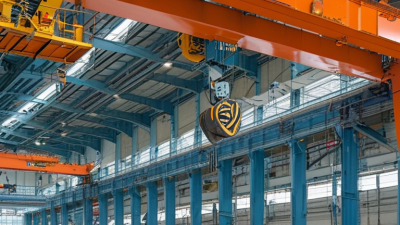
Its basic structure includes the girders, end trucks, legs, bracing, trolley, hoist, controls, and power supply. The girders carry the lifted load and transfer it through the end trucks and legs to the rails. Bracing limits sway. Small parts matter. Rail alignment, wheel contact, and wind exposure can affect stable travel, yet these details are sometimes underestimated during planning. Selection should consider rated capacity, span, lift height, load frequency, and operating environment. The Crane Manufacturers Association of America’s Specification No. 70 recognizes six service classes, A through F, reflecting differing duty demands. That classification helps engineers match crane design to expected use; it does not replace site-specific checks. A long span may look efficient, but it can increase structural demands and cost. The right configuration depends on real lifting patterns, not capacity alone.
What Is a Double Girder Gantry Crane?

A double girder gantry crane has two main girders supported by legs, with a hoist trolley traveling along the girders to lift and move loads.

Typical basic configuration: Two main girders span the crane, and a hoist trolley runs along them. The chart also shows two end carriages and two supporting leg frames as common arrangements. Actual designs vary with the crane’s capacity, span, and site requirements.

Main Components and Their Functions

What Is a Double Girder Gantry Crane?

Main Components and Their Functions

A double girder gantry crane has two parallel bridge beams, called girders, supported by legs that travel on ground rails or wheels. The girders carry the trolley and hoist across the work area. Two beams provide a stable track and can support demanding lifting arrangements, though the actual capacity depends on the crane’s design and operating conditions. The structure must stay aligned. Even small deviations can affect trolley movement over time.

The trolley moves sideways along the girders, positioning the hoist above a load. The hoist raises and lowers it using a wire rope or chain and a lifting attachment, such as a hook. End carriages connect the bridge to the legs and house the travel wheels. Their motors move the whole crane along its runway. Controls let an operator direct lifting and travel; limit switches and overload protection help restrict unsafe movement. They are not a substitute for careful operation. In practice, worn wheels, slack ropes, or an uneven runway can change how smoothly the crane handles a load. Regular inspection helps identify these issues before they become harder to manage.

How a Double Girder Gantry Crane Operates

What Is a Double Girder Gantry Crane?

How a Double Girder Gantry Crane Operates

A double girder gantry crane lifts loads with a hoist and trolley supported by two parallel girders. The girders span the work area, while end carriages carry the crane along ground-mounted rails. On some installations, the wheels run directly on a prepared floor. The exact arrangement depends on the site and the load.

During a lift, the operator positions the crane over the load, lowers the hook, and attaches approved rigging. The hoist raises the load; the trolley then moves it across the span, and the crane travels along its runway. These movements may be controlled separately or combined at low speed. Smooth travel matters. A swinging load can strike nearby equipment, so operators use gradual inputs and keep the load low when practical.

Brakes hold motion when controls are released, while limit switches help prevent travel beyond set points. Before operation, trained personnel typically check the hook, wire rope or chain, brakes, and controls. Real movement can feel less smooth than a diagram suggests. Wind, uneven ground, and load shape all affect handling. A crane’s rated capacity is not a target; the load and rigging must stay within the equipment’s documented limits.

Common Designs and Configuration Options

What Is a Double Girder Gantry Crane?

Common Designs and Configuration Options

A double girder gantry crane uses two parallel bridge girders to carry a trolley and hoist. This arrangement can support heavier loads and longer spans than many single-girder designs.

Details matter. In a full gantry layout, legs support both ends of the bridge, with wheels running on floor-level rails. A semi-gantry design runs on one floor rail and one elevated runway, which can help preserve aisle space.

Cantilevered ends extend the lifting area beyond the legs, but they also affect load distribution and clearance.

The trolley may travel on top of the girders or between them, depending on the required hook height and available headroom. A top-running trolley can suit demanding lifting duties; an underslung arrangement may help when overhead space is limited.

Hoist speed, lift height, span, and rated capacity should match the actual work, not just a peak load on paper.

Measure the tallest load and note nearby beams, lights, and doorways.

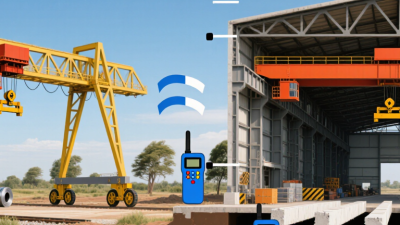
Configurations also vary by travel system and controls. Rail-mounted cranes suit fixed routes, while rubber-tired versions can move across a prepared yard. Operators may use a pendant, radio control, or a cabin, depending on visibility and site conditions.

A small detail can change the choice: rainwater, uneven ground, or a crowded turning area may complicate an otherwise suitable layout.

Check those site conditions early. The first draft of a configuration is rarely perfect.

Typical Applications and Key Selection Factors

What Is a Double Girder Gantry Crane?
Typical Applications and Key Selection Factors

A double-girder gantry crane uses two main beams to support a trolley and hoist. The arrangement can provide greater lifting height and capacity than many single-girder designs, depending on the configuration. These cranes are commonly used in shipyards, precast-concrete plants, steel yards, and outdoor assembly areas. Picture a long beam moving a heavy mold between casting bays, or lifting a steel section from a truck. The right setup depends on the actual work, not just the maximum load.

Start selection with rated capacity, span, lift height, and the heaviest load’s shape. Then check duty cycle: frequent, rapid lifts place different demands on machinery than occasional moves. Site conditions matter too. Uneven ground, wind exposure, limited headroom, and the path of workers or vehicles can all affect layout and operation. Ask for wheel loads and foundation requirements before preparing the site. Small detail, big consequence. The U.S. Bureau of Labor Statistics recorded 5,283 fatal work injuries across U.S. workplaces in its 2023 Census of Fatal Occupational Injuries; that figure is not specific to crane incidents. It is a reminder to treat safe access, controls, inspections, and operator visibility as real selection criteria—not extras. Specifications can look tidy on paper, yet a poorly placed control station may still make daily work awkward.

What Is a Double Girder Gantry Crane? - Typical Applications and Key Selection Factors

Category Dimension Typical Information Why It Matters for Selection
Overview Basic configuration A double girder gantry crane has two main bridge girders supported by legs that travel on rails or a prepared running surface. Its hoist trolley typically travels along the bridge girders. The two-girder arrangement can provide a stable bridge structure and accommodate demanding lifting and travel requirements, subject to the engineered design.
Typical Applications Container and intermodal yards Moving containers and other heavy cargo between storage areas, vehicles, and handling zones. Confirm the required lifting height, operating span, duty cycle, load-handling attachments, and yard layout.
Typical Applications Steel, precast concrete, and fabrication yards Handling long, bulky, or heavy materials such as steel sections, fabricated assemblies, and precast elements. Assess load geometry, lifting points, sling or spreader requirements, clearances, and the need for controlled positioning.
Typical Applications Shipyards and heavy maintenance areas Lifting large components or equipment in outdoor or open-bay work areas where a building-supported overhead crane may not be practical. Consider wind exposure, weather protection, corrosion conditions, ground support, and safe access for inspection and maintenance.
Selection Factors Rated capacity and load characteristics Specify the maximum lifted load, including below-the-hook devices, and describe load dimensions, balance, and handling frequency. The crane, hoist, trolley, runway, and supporting ground or foundations must be designed for the applicable loads and operating conditions.
Selection Factors Span, lift height, and hook approach Span is the distance between the gantry’s supporting travel paths. Lift height and hook approach define how high and how close to the edges the load can be positioned. Measure the work area and account for obstructions, load dimensions, vehicle access, and required clearances before choosing the configuration.
Selection Factors Duty cycle and operating speeds Describe lifts per hour or shift, typical load distribution, travel distances, and desired hoisting, trolley, and gantry speeds. Operating frequency and load spectrum affect component selection, durability, maintenance planning, and the appropriate crane duty classification.
Selection Factors Site, track, and power supply Review rail alignment, ground-bearing capacity, drainage, available electrical supply, cable or conductor arrangements, and site access. Site conditions influence the support system, travel arrangement, installation plan, and safe operation. A qualified engineer should verify structural and foundation requirements.
Selection Factors Environment and safety requirements Identify indoor or outdoor use, temperature range, dust, moisture, corrosive exposure, wind conditions, and applicable local regulations. Environmental and regulatory requirements can affect materials, enclosures, protective features, operating limits, and inspection procedures.
Configuration Note Full or semi-gantry arrangement A full gantry generally travels on supporting paths on both sides. A semi-gantry arrangement has one side supported by a building runway and the other by a leg on a travel path. The right arrangement depends on the site layout, existing structures, required coverage, and the capacity of the building and ground supports.

Note: Capacity, dimensions, speeds, and duty classification are project-specific. Final selection should be based on a site assessment and applicable engineering and safety requirements.